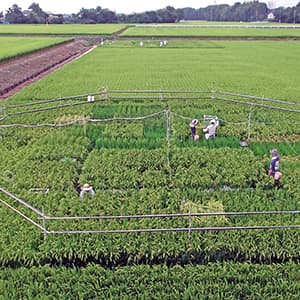
The growth of paddy rice is affected by meteorological phenomena. Both 2023 and 2024 have seen high temperatures of a kind expected to occur just once in 30 years, resulting in rice supply shortages that have been dubbed the “Reiwa no Kome-sodo (rice shortage),” likening the situation to unrest caused by similar shortages in previous centuries. High temperatures caused by the effects of global warming are forecast to lead to further decline in both yield and quality in years to come. Combined with the impact of higher CO2 concentrations, which are also said to be a factor in global warming, it seems likely that the deterioration in yields and quality will become even more serious than conventional projections suggest. Response measures are, however, progressing, including the development of heat-tolerant rice cultivars, and efforts to shed light on climate change processes to facilitate accurate forecasting of growth and yield.
