Special Feature 1 – The Hidden World of Slime Molds Cellular slime molds can tell friend from foe
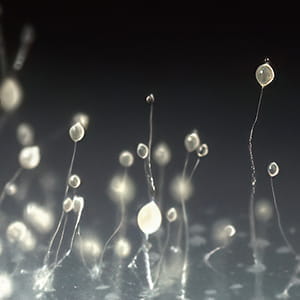
Plasmodial slime molds (myxomycetes) attracted attention for being intelligent unicellular organisms that have neither a brain nor a nervous system. Bearing the name slime mold, cellular slime molds too have an ingenious strategy for distinguishing friend from foe using different chemical signals. Cellular slime molds, which inhabit the soil’s surface layer, attract free-living nematodes living in the same habitat to serve as spore vectors, but repel root-knot nematodes, which cannot serve as suitable vectors because they lurk deep in the soil. Applying this mechanism will open up the way to protecting agricultural crops from root-knot nematodes, which are a critically important pest, while overcoming dependence on highly toxic agrochemicals.
