
Plasmodial slime molds (myxomycetes) attracted attention for being intelligent unicellular organisms that have neither a brain nor a nervous system. Bearing the name slime mold, cellular slime molds too have an ingenious strategy for distinguishing friend from foe using different chemical signals. Cellular slime molds, which inhabit the soil’s surface layer, attract free-living nematodes living in the same habitat to serve as spore vectors, but repel root-knot nematodes, which cannot serve as suitable vectors because they lurk deep in the soil. Applying this mechanism will open up the way to protecting agricultural crops from root-knot nematodes, which are a critically important pest, while overcoming dependence on highly toxic agrochemicals.
Special Feature 1 – The Hidden World of Slime Molds Cellular slime molds can tell friend from foe
composition by Shiho Fujiki

Tamao Saito
Specially Appointed Professor, Sophia University
After graduating from Hokkaido University, she became a high school teacher, and then completed a doctoral program at the Graduate School of Science, Hokkaido University, gaining a Ph.D. in science. She was appointed a research assistant at Hokkaido University in 1996, then took up the post of visiting researcher at the MRC Laboratory of Molecular Biology in the UK in 2002. In 2009, she joined the Department of Materials and Life Sciences at Sophia University’s Faculty of Science and Technology as an associate professor and was promoted to professor there in 2014. She has held her current post since April 2026. Her field of specialization is biomolecular science. Using cellular slime molds as model organisms, she conducts research into inter-organism communication between soil microbes, in an effort to develop antimicrobial agents and pest control methods.
The microorganisms that inhabit the soil produce various chemical substances and actively communicate with other organisms in the course of their lives. Over the years, I have developed an interest in this kind of chemical communication, which could be described as conversations between soil microbes, and have conducted research that focuses in particular on the relationship between nematodes and cellular slime molds. Bacteria, fungi, invertebrates and other organisms form a stable ecosystem within the soil, using plant-derived organic matter as a foundation. The relationship is such that cellular slime molds prey on bacteria but are preyed upon by nematodes and other organisms.
Beneficial free-living nematodes and harmful root-knot nematodes
Usually, cellular slime molds live as unicellular amoebae, ingesting bacteria in the soil and repeatedly undergoing binary fission. However, when they have eaten up all the available food, they enter a state of starvation; individual cells then aggregate to form a multicellular structure, and ultimately produce fruiting bodies. In this process, they differentiate into cells that will become spores and cells that will become stalks supporting the spores. Thus, cellular slime molds, which exhibit both unicellular and multicellular stages in their life cycle, are important model organisms from the perspective of biological evolution. (Figure 1).
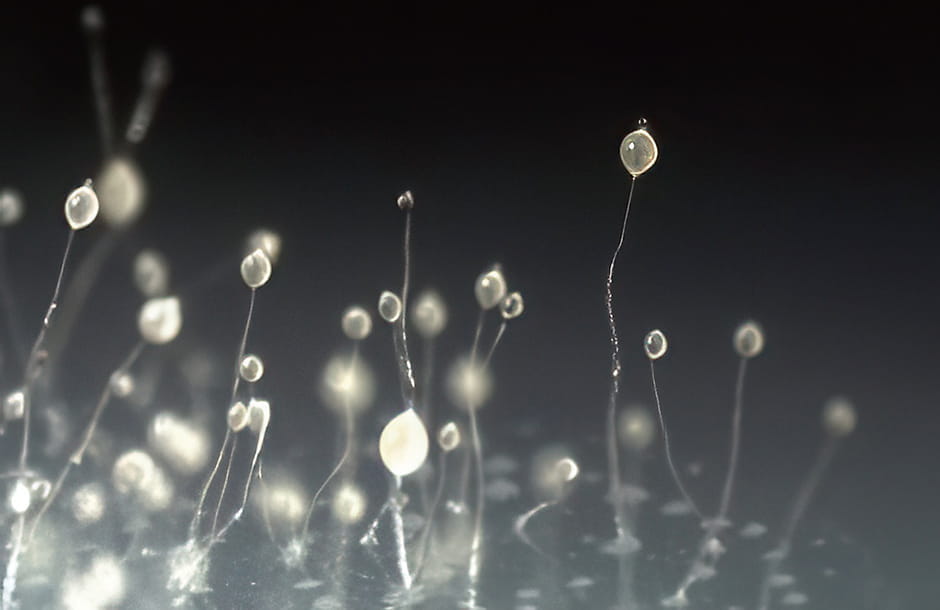
Figure 1. Cellular slime moldCellular slime molds inhabit the surface layer of soil and have both unicellular and multicellular phases. They share the same habitat as free-living nematodes and sometimes compete with them for food.
Cellular slime molds are abundant in the soil surface layer down to a depth of 3 cm, which is inhabited by large quantities of the bacteria on which they feed. They favor damp places, such as under fallen leaves. When I isolated cellular slime molds from the wild and tried to culture them, I found that they were inevitably accompanied by nematodes, which seemed very strange at first. Most notably, cellular slime molds and free-living nematodes, which are both soil organisms, have the same habitat and the same food, and sometimes even vie with each other over bacteria. What accounts for this close relationship? I thought that perhaps they might have their own language to communicate with each other.
Accordingly, I investigated the relationship between cellular slime mold fruiting bodies and two types of nematodes: free-living nematodes, which are beneficial to the soil, and root-knot nematodes, which are a type of parasitic nematode that adversely affect plant roots. As a result, I discovered that cellular slime molds attract free-living nematodes but repel root-knot nematodes.
Why is there such a big difference between them, given that they are both nematodes? Free-living nematodes live in shallow underground places where bacteria are prevalent. More specifically, free-living nematodes share the same habitat as cellular slime molds, which are aerobic and live a few centimeters below ground. This suggests that slime molds use nematodes as vectors to carry their spores long distances in order to ensure the survival of the next generation. In contrast, it is likely that cellular slime molds avoid root-knot nematodes because they cannot be used as vectors, as these nematodes inhabit areas 20–30 cm below ground, close to plant roots, where cellular slime molds do not typically live. Thus, cellular slime molds appear to have highly ingenious strategies that involve enticing beneficial nematodes in order to use them, while keeping harmful nematodes at a distance.
15–20% of crops are affected by nematodes
Nematodes are regarded as one of the most populous groups of animals on Earth, and it is not unusual for the surface layer of forest soil to contain 10 million or more of them per square meter. Nematodes are divided into free-living nematodes and parasitic nematodes; typified by the model organism Caenorhabditis elegans (C. elegans), the former improve soil quality and curb damage from soil diseases, so they serve in agriculture as partners in protecting soil health. Parasitic nematodes, on the other hand, are further divided into plant-parasitic nematodes that live in soil, such as root-knot nematodes, root-lesion nematodes, and cyst nematodes, and animal-parasitic nematodes in the form of Anisakis, Ascaris, and Filaria.
As stated above, I have principally used plant-parasitic nematodes, particularly root-knot nematodes, which cause serious harm in agriculture. Very small, at just 0.5–1 mm long, these nematodes are hard to see with the naked eye, but they are critically important pests that parasitize plant roots, causing root knots to form on them. Root knots consist of giant cells several times the size of normal cells together with proliferated surrounding cells. When these root knots form, they impede the absorption of water and nutrients via the roots, causing chronic undernutrition in the plant that results in yellowing of the leaves and poor growth. Unlike pests that attach themselves to leaves and stems, root-knot nematodes invade the roots, which means that the damage is already advanced by the time symptoms appear above the ground, at which point the plant is beyond help (Figure 2).
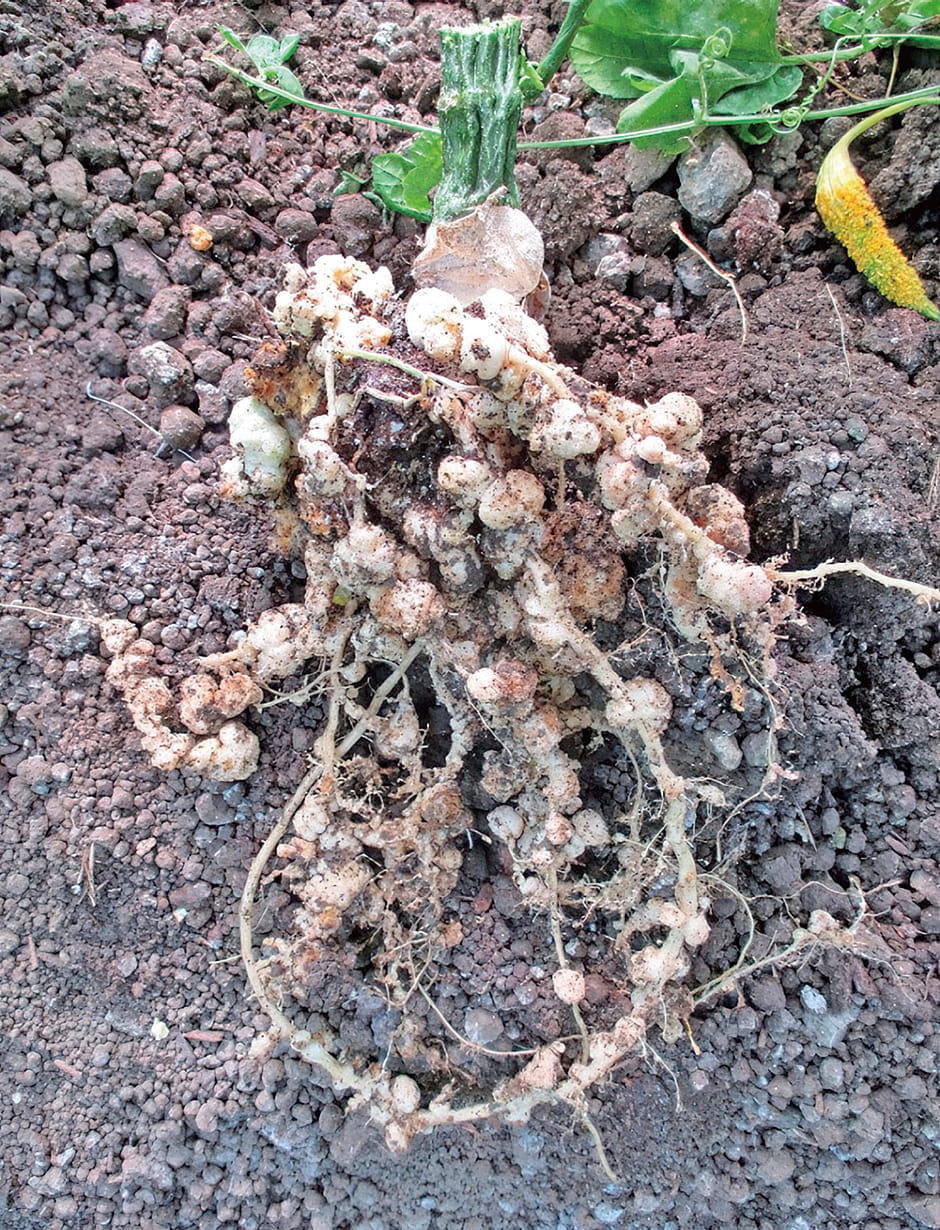
Figure 2. Crop (bitter melon) damage caused by root-knot nematode infestationThe root knots formed by the infestation inhibit the absorption of water and nutrients, thereby impeding crop growth. In many cases, the damage has already progressed underground by the time symptoms appear above ground.
Root-knot nematodes are also characterized by their broad host range. In the majority of cases in the natural world, there is a set relationship between parasitic organisms and their hosts, but root-knot nematodes can parasitize almost all crop plants, so they have a huge impact on agriculture as a whole. For example, root-knot nematode infestations also promote the onset of bacterial wilt and other soil diseases, which inhibit plant growth and cause the roots to rot and fall off. On a global scale, too, scientists estimate that 15–20% of agricultural produce suffers nematode damage; as such, these losses cannot be ignored. In addition, scientists have also pointed out that global warming resulting from climate change is expanding nematode habitats and causing faster generational turnover, giving rise to the possibility that damage could increase further.
Back in 1996, when I began my research exploring the relationship between cellular slime molds and nematodes, there was only a single paper on the topic. This paper showed, using dauer larvae, that cellular slime mold fruiting bodies attract free-living nematodes, whereas it was suggested that mature individuals gathered around the base of the fruiting bodies.
Nematodes prey on cellular slime mold amoebae. However, slime molds are not simply passive victims. The amoebae appear to repel nematodes using some kind of chemical substance. Even if the spores are consumed, they are excreted again without being digested in the nematode’s body. So why, despite this fact, do nematodes behave as if they are attracted to spores and consume them?
Although we do not yet understand the details of this mechanism, I believe that some form of communication probably takes place using chemical substances. If a nematode accidentally ingests indigestible spores and eventually reaches a new habitat, the cellular slime mold will begin proliferating again there. In other words, it would appear that slime molds are expanding their range by using nematodes to transport their spores. One could say that this is a smart survival strategy for these organisms, which is possible precisely because both organisms share the same habitat and food.
Slime mold extract prevents root-knot nematode infection in plant roots
At the same time, we discovered that root-knot nematodes and cellular slime molds have the opposite relationship: cellular slime molds repel root-knot nematodes, sending out the message, “Avoid me.” When we put root-knot nematodes and cellular slime mold together in a petri dish, the root-knot nematodes all moved at once to avoid the slime mold (Figure 3). We obtained the same results with a further experiment, in which we placed slime mold on some filter paper and allowed it to form fruiting bodies, then removed the filter paper with the slime mold attached. We found that the traces of root-knot nematode movement differed according to the concentration of the chemical substance secreted by the cellular slime mold, which led us to conclude that chemical substances secreted by slime molds repel root-knot nematodes. It was around then that we began to explore agricultural applications and embarked on an experiment in which we placed cellular slime mold extract beside plants.
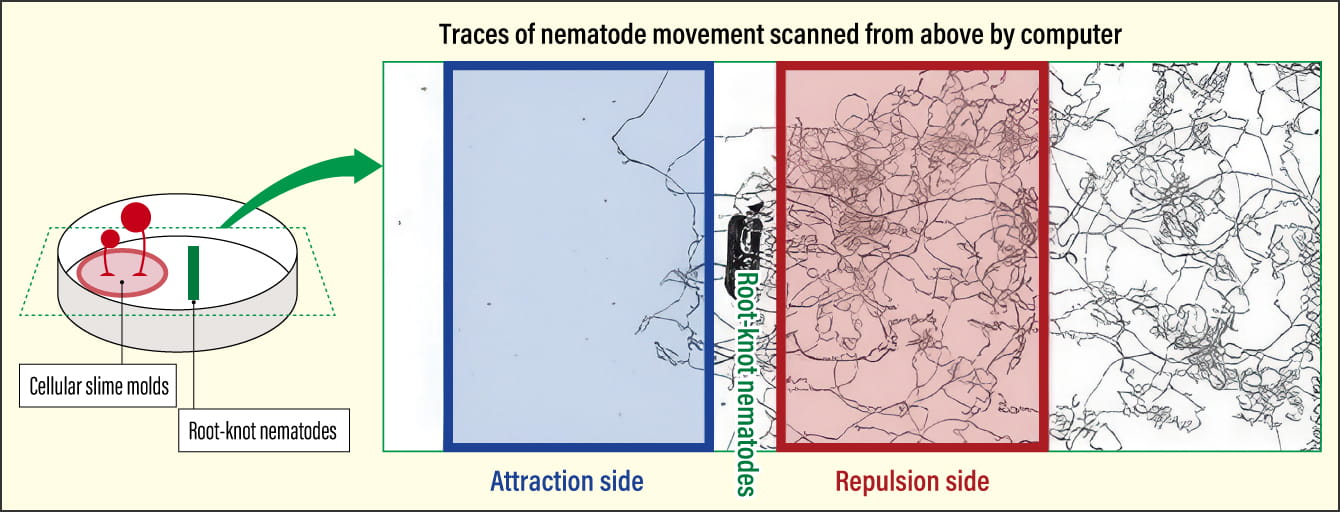
Figure 3. Nematode behavior avoiding cellular slime moldsRoot-knot nematodes moved away from the cellular slime mold, demonstrating that the cellular slime mold sends out the message, “Avoid me.”
Using three plant samples, a substance extracted from cellular slime mold was impregnated into filter paper and placed next to the root of one plant, while nothing was placed next the roots of the other two plants. Fifty root-knot nematodes were placed 1 cm away from the root tips of each plant, and the plants were cultured for two days. Upon doing so, we found that whereas hardly any root-knot nematode infection was observed in the roots beside which the slime mold extract had been placed, the roots of plants beside which nothing had been placed were infected with a large number of root-knot nematodes (Figure 4). Thus, the cellular slime mold extract that repels root-knot nematodes was able to protect the plant roots from root-knot nematode infection. We also demonstrated that the higher the concentration of the extract, the stronger the avoidance behavior exhibited by the root-knot nematodes. These findings were reported in a paper we published in 2018.
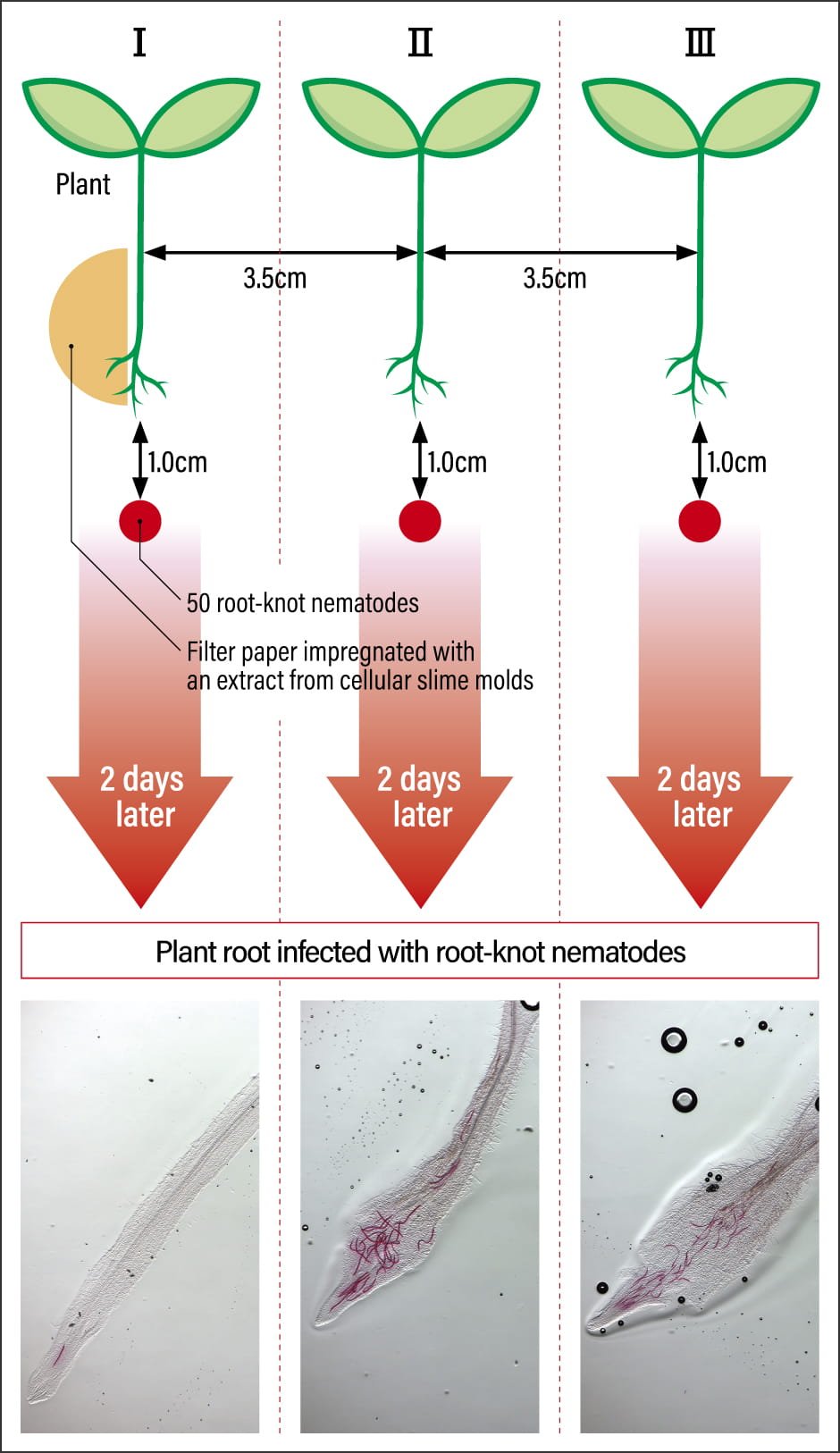
Figure 4. Cellular slime mold extract prevents root-knot nematode infection in plantsIn case I, where the filter paper impregnated with the extract was placed near the plant root, root-knot nematode infection was substantially inhibited, demonstrating that chemical substances derived from cellular slime molds protect plants from root-knot nematode infection. In contrast, a large number of nematode infections were observed in the roots in Cases II and III. This is presumed to be due to the absence of filter paper soaked in the extract near the roots.
If cellular slime molds secrete chemical substances that repel the root-knot nematodes that cause soil diseases, perhaps we could use these substances to protect crops? With this idea in mind, we then set to work on developing techniques for the mass culture of cellular slime mold extract, with a view to commercialization. To begin with, we struggled to produce even a few dozen milliliters of the extract. However, after switching the cell culture method from plate culture to a liquid culture medium, as well as optimizing the extraction process and other conditions, we achieved substantial improvements in efficiency and confirmed a thirty-fold increase in the yield of conditioned medium (CM) containing the repellent ingredient. We produced a fast-growing variant, whose repellent activity per unit weight is 1.6 times that of the conventional extraction method. We have obtained a patent for this technology for the mass production of CM with repellent activity. The high-concentration CM not only repels root-knot nematodes but also inhibits egg hatching and kills their larvae.
In collaboration with a company, we conducted a 63-day pot trial of this CM on tomato plants. The results confirmed that it demonstrated a high level of control (control value) against root-knot nematodes, whilst also proving effective in promoting crop growth. The CM curbed root-knot nematode infestation of crops, and, with a control value of 75%, amply met the control value standard required for agrochemicals (50%). In fact, the average weight of the above-ground portions of the harvested crops more than doubled. The root-knot nematode we mainly used was the southern root-knot nematode (Meloidogyne incognita), which parasitizes sweet potatoes and other crops, but we have also confirmed that the CM has a similar effect on other nematodes.
Identified 14 compounds with repellent activity
In parallel with these efforts, we also succeeded in identifying the compounds derived from cellular slime molds that repel root-knot nematodes, thereby elucidating the composition of CM. As a result of our analysis of the water-soluble components of the CM, we were able to identify 14 compounds with repellent activity. These included L-form basic amino acids, L-ascorbic acid, and other known compounds found in the natural world, all of which are considered safe compounds.
When we verified the effects of these compounds individually and in combinations of several compounds, we found that a mixture of all 14 and a mixture of 13 that excluded lysine had particularly powerful effects. Just 0.05 mg of these mixtures achieved repellent activity equivalent to 5 mg of the CM, demonstrating that they exhibited repellent effects approximately 100 times greater than that of the CM.
At present, the only effective means of controlling plant-parasitic nematodes is the application of agrochemicals. However, it goes without saying that agrochemicals are highly toxic, so there are concerns about their impact on the soil environment, safety for workers, and effects on groundwater. Agrochemicals are generally applied in granular form, but the work of applying them requires a great deal of effort, and because toxicity remains immediately after application, it is necessary to wait for a certain period before planting crops. Even so, given that nematodes lurk in very tiny gaps deep in the soil, these agrochemicals cannot fully reach the nematodes and, as a result, in quite a few cases, the surviving nematodes proliferate again, causing the damage to expand repeatedly.
Moreover, as agrochemicals can only be used before planting, it has been difficult to protect crops grown over long periods from root-knot nematode infection. The CM method, on the other hand, can not only be used even after planting but also promote plant growth. I am keen to develop a new pest control method in the field of integrated pest management (IPM) that leverages these advantages and helps reduce our dependence on highly toxic agrochemicals. The importance of controlling root-knot nematodes is expected to increase further as global warming progresses and soil temperatures rise worldwide. Biological production methods are characterized by few byproducts, high efficiency, and low environmental impact. I believe it will be a great help to next-generation sustainable agriculture if we can bring to fruition a new pest control method that sustainably curbs nematode infection of crops, while reducing the quantity of agrochemicals used and making the soil healthier.
Soil is a dynamic environment in which diverse organisms interact in complex ways. By focusing on the chemical communication that occurs in soil, we can gain insight into how organisms survive by helping each other and sometimes competing with each other. Unraveling these conversations between organisms might open the way to major future innovations, such as the establishment of sustainable agriculture and the creation of new drugs.