
Japan’s tradition of agricultural production in the urban periphery stretches back to the Edo period, but the City Planning Act enacted in 1968 triggered a deterioration in the agricultural production environment in urbanization promotion areas. Urban agriculture is closely connected not only to the growing of agricultural produce, but also to communities, environmental conservation, and food education. As such, it plays an important part in food culture and communities. Following experiences including the Great East Japan Earthquake, efforts focused on rethinking agriculture in city suburbs gathered momentum, leading to the 2015 enactment of the Basic Act on the Promotion of Urban Agriculture, which removed a variety of obstacles. Now, tens of thousands of people are beginning to move into agriculture every year.
Special Feature 1 – The Agricultural Revolution Supporting city diets and environments: Urban agriculture facing a new turning point
composition by Rie Iizuka
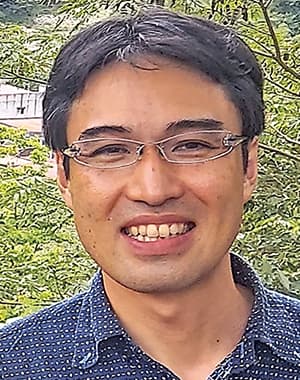
Hironori Yagi
Associate Professor, Graduate School of Agricultural and Life Sciences, The University of Tokyo
A graduate of the University of Tokyo’s Faculty of Agriculture, he obtained a Ph.D. in agriculture in 2005. Before taking up his current position, he held posts at the Land Use Laboratory of the Ministry of Agriculture, Forestry and Fisheries National Agriculture Research Center, and the Regional Planning Laboratory at the National Institute for Rural Engineering, among others. He is highly regarded for his work on business management improvements based on fieldwork, regional development based on agriculture, and agricultural land conservation and use initiatives. He has received awards from academic societies for his books Toshi-Nogyo Keiei-ron [Farm Business in the Urban Areas] and Suiden-Keiei no Senryaku to Soshiki [Strategic and Organizational Management of Rice Farms] (both published by Nihon Keizai Hyoronsha). In 2024, he was awarded a research grant from the Casio Science Promotion Foundation (42nd Research Grant Program).
Urban agriculture in Japan began to emerge in the Edo period (1603–1868). Agriculture in the urban periphery flourished in the rural communities surrounding Edo, seeking to supply vegetables to that immense consumer market. However, the concept of urban agriculture as we use it today only emerged in the Shōwa era (1925–1989). In the early Shōwa period, Tokyo saw rapid urbanization, primarily in the area within the Yamanote railway line that encircles central Tokyo. Just 50 years after the war ended, the population of the Tokyo metropolitan area —— the area within a 50 km radius of Tokyo’s center —— reached 30 million. In the process, the concept of urban agriculture was formed.
The choice between continuing to farm or converting the land to residential land
Due in part to the rapid development of new towns in the 1960s in response to population growth in the Tokyo metropolitan area, 1968 saw the enactment of the City Planning Act, which classified districts by usage into “urbanization promotion areas” and “urbanization control areas”. Defined as districts set to become residential land within approximately 10 years, urbanization promotion areas included a great deal of agricultural land. Today, most experts highlight this as a failure of urban planning. Conversely, it also meant that land not converted to residential land within 10 years would remain agricultural land thereafter; it was from this ambiguous situation riddled with such contradictions that the urban agriculture movement was born.
However, in 1991, an amendment to the Act was formulated requiring agricultural landowners to choose between continuing to use land for agricultural purposes and, if not, converting it to residential land. This amendment act entered into force the following year. Agricultural landowners who had no option but to convert their land to residential land due to a lack of successors then faced a fixed asset tax comparable to that for residential land and an inheritance tax of around 50%, which naturally provoked intense debate. Criticism focused on the fairness of the taxes, not only in cases in which agricultural landowners ultimately retained their agricultural land due to being unable to convert it to residential land, but also in regard to farmers choosing to pursue agriculture as a family business or occupation, with questions raised about why special provisions for taxation should be applied to agricultural land. The system was clearly distorted. It was only to be expected that the number of farmers would continue to decline as a result of this amendment to the Act, and even those opting to remain in agriculture faced many difficulties.
Most farmers who lacked the savings to pay inheritance tax ended up selling part of their land to cover the tax, and agricultural land progressively dwindled over the generations. When large tracts of agricultural land were sold piecemeal for residential land, the problems inherent in urban agriculture —— such as housing blocking sunlight to agricultural lands and difficulties in spraying agrochemicals —— escalated.
Enabling agricultural land to be maintained even without successors
The situation then changed in the 2000s. Demand for residential land fell with the collapse of the bubble economy; then, following the period of low economic growth and the Great East Japan Earthquake, a growing feeling emerged that it might be time to rethink agriculture in the urban periphery. The Basic Act on the Promotion of Urban Agriculture was enacted in 2015 and, reflecting on the fact that proper agricultural policies had not been implemented in urban areas until then, the Ministry of Agriculture, Forestry and Fisheries (MAFF) recognized urban agricultural land as a place for fulfilling the multifunctionality of rural areas, and began formulating a basic plan based on this.
A 2018 amendment to the Act substantially altered the trajectory of urban agriculture. Until then, those who owned agricultural land only qualified for inheritance tax deferral in cases where it was used as productive green space, based on the premise of maintaining agricultural land until the next generation. However, the scope of application was extended, and tax deferral was also applied when owners had leased the land to individuals using it as productive green space, on condition that this contributed to improving the urban environment. As a result of this amendment, it became possible for agricultural landowners to maintain their agricultural land, even if they had no successors. At the same time, it removed the barrier faced by those wishing to become farmers, whereby they were unable to enter agriculture unless their parents had been farmers.
There is a diverse array of specific examples. Just looking at the cases I know of, one can see the spread beyond the conventional confines of agriculture, including farmers cultivating grapes for wine, and new farmers renting agricultural land to cultivate soybeans for natto (fermented soybeans).
Urban and rural agriculture differ considerably in format. One feature of urban agriculture is diversified production, in which farmers grow a variety of different items in small quantities. For example, during harvest season in cabbage production areas, farmers are involved in the endless task of harvesting a large quantity of cabbages —— and nothing but cabbages —— every day, packaging them up, and transporting them to the collection center. This sort of situation is virtually unheard-of in urban agriculture, where a single farming family will produce 20 to 40 items and sell a diverse array of vegetables from a simple shed-like stand, earning a steady income in the process.
This trend began between the latter half of the 1970s and the 1980s, with a stronger tendency in this direction, the closer one gets to a city. There are several reasons behind it. For example, cultivating a single crop on a large area of land requires the purchase of large, expensive machinery to improve efficiency. In addition, it increases the risk of total crop loss due to pests and disease. However, growing numerous crops in small quantities enables them to be cultivated by hand, without the need for large machinery, and mixed planting of multiple types of vegetables as companion plants can be effective in curbing pests and diseases. Naturally, growing small quantities of multiple crops requires more effort and is less efficient than growing a single crop in large quantities, but efforts to address this include involving agricultural volunteers.
Digitalization is making urban agriculture a familiar presence
Recent years have also seen advances in the introduction of information and communications technology (ICT). Consumers can use their smartphones or other devices to check what produce is on offer at direct sales outlets, thanks to the emergence of apps such as Mievegi, which enables urban farmers to install cameras in direct sales outlets in their gardens and transmit information about stock availability via the cloud, and Locasta, a direct sales information app run by the city of Higashimurayama in Tokyo (Figure 1). With the number of farmers using social media and websites also on the rise, digitalization is making urban agriculture an even more familiar presence in people’s lives. In addition, it appears that awareness of farmers and others is also changing as they engage with such technologies, because they provide visual feedback on what consumers want and what is selling well.
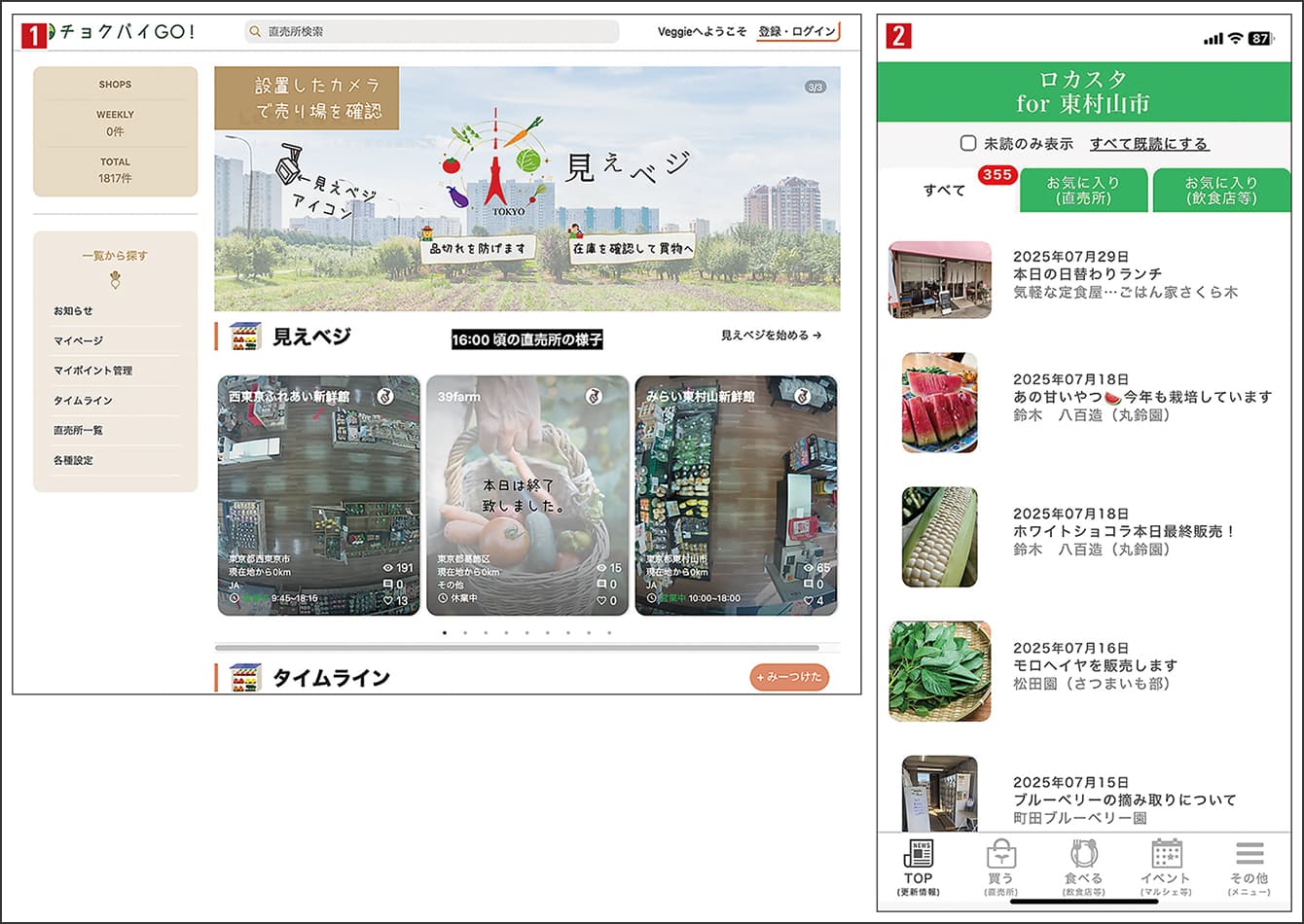
Figure 1. ICT mechanisms supporting local direct sales outlets, etc.1Mievegi is an app that uses cameras installed by farmers in direct sales outlets in their gardens to film the sales area, with users able to view the automatically transmitted images via the app. The “Chokubai GO!” function allows users to check the situation inside direct sales outlets. The mechanism provides real-time information, allowing consumers to find out what products are in direct sales outlets right now, and producers to monitor how their products are selling.
https://veggie.co.jp/
2Locasta is a service for local governments promoting local production for local consumption. Users can search for direct sales outlets within their municipality, as well as obtain information about businesses serving locally produced food and businesses offering hands-on experience in agriculture, forestry and fisheries.
https://pr-c.locasta.jp/
Another major difference between urban agriculture and rural farming is income patterns. In the case of urban agriculture, direct sales are the main pillar of income, accounting for a larger share the closer one gets to a city. Between 50% and 80% of urban farmers engage in some form of direct sales, whether shipping produce to five or so of the direct vegetable sales sections one often sees in supermarkets, selling their produce wholesale for use in school lunches a few times a week, or setting up a direct sales outlet in their garden.
Another characteristic of urban agriculture is its high profitability. Key examples include pick-your-own farms and experience farms. While planting and weeding are also hard work, the parts of vegetable growing that require the greatest amount of labor are harvesting and the subsequent tasks of sorting and bagging up the produce. Pick-your-own farms and the like leave this to the customers, who even pay a fee to do so, making such operations highly profitable. This is possible because these farms are located close to urban areas that attract many people; in a place with a high population density, urban farmers can earn income as long as one person in 100 visits.
Urban agriculture in Japan is distinguished by closer relationships with consumers than those seen in other countries. Due to the historical background and tax system constraints, agricultural land in Japan remains in complex forms. Accordingly, farmers can adopt comparatively flexible sales formats. Quite a few overseas researchers have praised Japanese direct sales outlets as surprisingly substantial. Although Western countries have farmers’ markets, which are held regularly in spaces like public squares, there are few direct sales outlets as good as those in Japan, nor are there well-set-up home delivery systems such as Japanese Consumers’ Co-operatives.
Urban agriculture is also a particularly strong manifestation of the multifunctionality of rural areas. Aside from the growing of agricultural produce, it delivers lifestyle-enriching functions relating to social interaction, food education, local production for local consumption, and environmental conservation.
One such function is serving as a venue for food education where children can experience local production for local consumption. Eating vegetables harvested in the area where they live helps to promote children’s understanding of this concept; in addition, the use of local produce in school lunches can also serve as a living teaching material. Children living in the heart of the metropolis have few opportunities to come into contact with the places where production takes place, so quite a lot of schools combine factory tours with hands-on harvesting experience and the like.
As stated above, one feature of urban agriculture is its diversified production; enabling children to come into contact with a diverse array of ingredients and fresh local produce is tremendously meaningful from the perspective of cultivating a rich diet. Most notably, freshly picked vegetables are indescribably tasty. I often hear of cases where eating fresh, locally grown vegetables has given children a taste for vegetables that they previously disliked.
Urban agriculture also plays a major role in building a sense of community (Figure 2). Cultivation of a wide variety of produce in small quantities —— rather than engaging in efficient, large-scale agriculture —— makes it easier to establish mechanisms for forging ties between people. The farmers who sell their produce at direct sales outlets run by agricultural cooperatives or other organizations tend to have comparatively small-scale operations, but ties forged through such venues have sometimes helped farmers to find successors in their local area. In a growing number of cases, experience farms run by welfare service providers offer users of welfare facilities a place to engage in agricultural work, which also appears to be leading to interaction with local residents. I have also heard of situations in which going out to work on farms during the pandemic was good for people’s mental health.
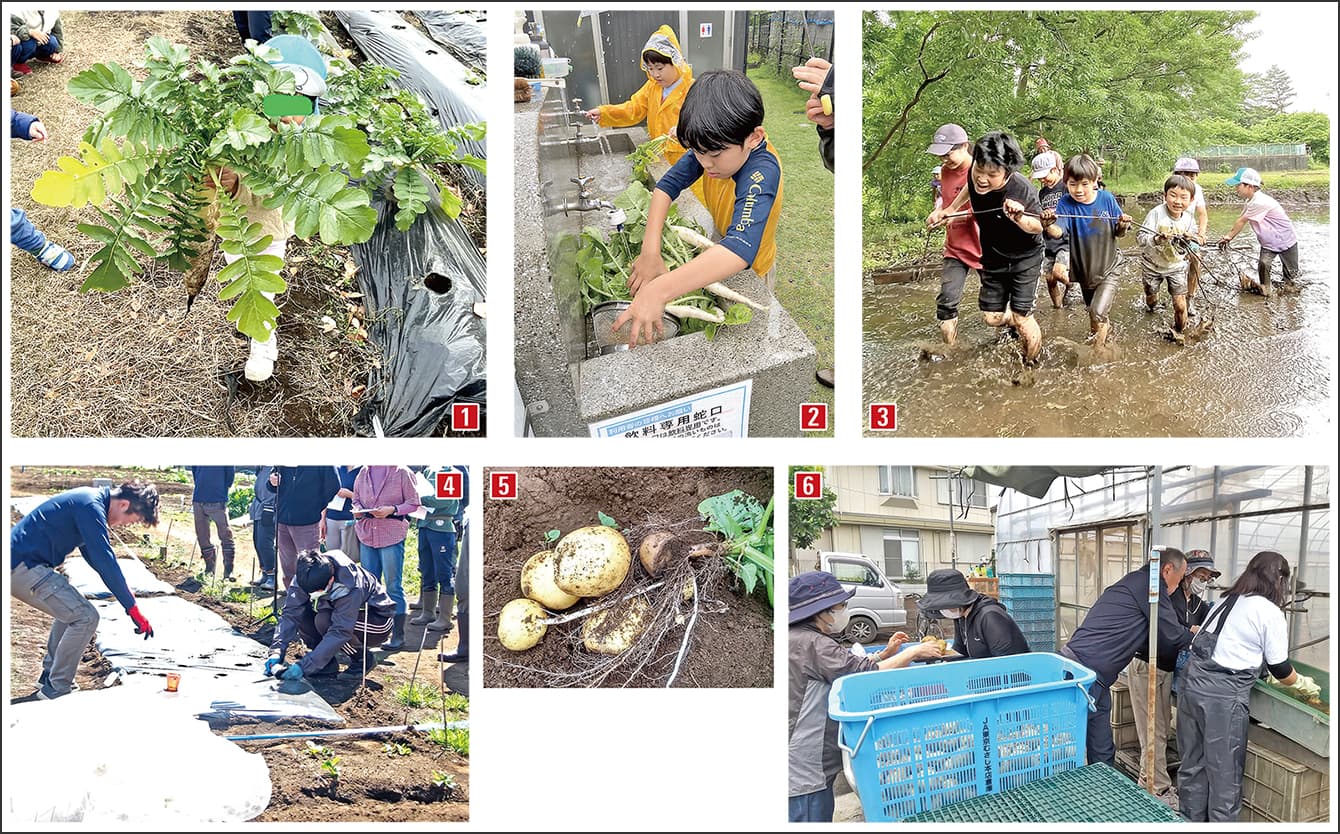 (Photographs courtesy of WAKUWAKU Tomin-Nouen Koganei)
Figure 2. Scenes from urban agricultureWAKUWAKU Tomin-Nouen Koganei opened in 2022 as a venue for interactive multigenerational experiences operated by the Tokyo Metropolitan Government. It aims to leverage the productive green space leasing system to help conserve urban agricultural land, provide a place where seniors and people with disabilities can be active, and promote multigenerational interaction. Operated by a partnership bringing together Tokyo Metropolitan Government, Koganei City, owners of productive green space, and Koganei City Tourism Association, this facility provides a place where local schoolchildren, welfare facility users, seniors and others can routinely enjoy agriculture. 1A child harvesting a radish so large, it completely hides their face. 2Washing vegetables intended to serve as a snack. 3Children’s farm activity in a rice paddy leased from a university. Preparing the soil for planting by tilling the flooded paddy to make the soil softer. This hard manual labor requires everyone to work together. 4Local farmers instruct participants in how to carry out tasks such as sowing seeds. 56Users of the seniors’ farm help out with farm work in a farmer’s field. On this occasion, they were helping to ship potatoes for school lunches.
As farmers fulfill this multifunctionality, it is vital to ensure that it gives rise to mutual benefits through interaction, rather than benefitting solely urban residents, as this will help to motivate farmers. Mechanisms of this kind also have elements that uphold farmers’ sense of pride and increase their willingness of passing on farming to the next generation.
However, there is also an overall mismatch in the leasing of agricultural land: the total area of agricultural land in Tokyo (excluding its islands) divided by its population of 14 million fell from 7.4 m2 in 2000 to 3.9 m2 in 2022. Even if population decline progresses, the area of agricultural land is not expected to recover significantly. In an effort to improve this situation, the conversion of agricultural land to public ownership has been gradually occurring of late, and reclamation work aimed at turning residential land back into agricultural land is also taking place.
At the same time, despite the fall in Japan’s overall population, the number of people wanting to enter agriculture has not decreased significantly. There has been an ongoing upward trend over the last 20 to 30 years, with tens of thousands of new entrants to agriculture every year. In urban areas with high population concentrations, there are many people who find more value in agriculture than in urban life. Urban agriculture offers such people a place where they can provide a diverse array of value. For consumers, too, urban agriculture is a valuable place where they can come into close contact with agriculture as a venue for food production. I believe that learning about the reality of agriculture can also serve as an important experience for us in thinking about our diets going forward.