
Sport is essential to our lifestyle today, to maintain our health and enrich our daily lives. All sports require regular training and efforts to make the body stronger, with effective nutrition being crucial. However, many people these days have adopted inappropriate diets as a result of their unquestioning acceptance of incorrect information from social media and the like. The key rule is virtually the same as for one’s ordinary diet: one needs the right balance of the three energy-producing nutrients, carbohydrates, protein, and fat —— also known as macronutrients. One must also be diligent about staying hydrated.
Special Feature 1 – Sports and Nutrition No shortcuts when it comes to nutrition —— the right balance of the three macronutrients
composition by Yuko Watanabe
illustration by Rokuhisa Chino
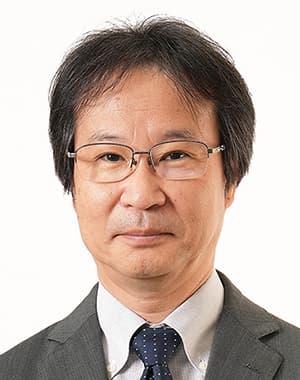
Kazuhiro Uenishi
Professor, Undergraduate School of Nutrition Sciences, Kagawa Nutrition University
Graduated from the School of Nutrition (now known as the School of Medical Nutrition) at Tokushima University Faculty of Medicine in 1984. In 1986, he successfully completed the master's program at the university's Graduate School of Nutrition (now known as the Graduate School of Medical Nutrition). He then joined a food-related company, where he was involved in developing liquid meals for hospital inpatients. In 1991, he began working at Kagawa Nutrition University. He took up his current position in 2006, after holding the posts of research associate, assistant professor, and associate professor at the university. His significant achievements in the formulation of the Dietary Reference Intakes for Japanese and the Guidelines for the Prevention and Treatment of Osteoporosis have been recognized with the conferral of the Minister of Health, Labour and Welfare's Award for Contribution to the Training of Nutrition Professionals.
Recent years have brought increased attention to sports nutrition, a field that involves managing the diets of world-class athletes, and also on the activities of dietitians. Eating is an essential part of building a body able to maximize the effects of day-to-day training. Focused on considering how to achieve more effective nutritional intake, sports nutrition has become firmly established as a valued element of sports training. It is just as important for ordinary runners and swimmers, as well as for those training at a gym.
When it comes to diet and nutrition, I get the feeling that many people are influenced by incorrect information gleaned from social media. There are no magic foods that will definitely improve your performance or ensure you win if you eat them. Just like the steady, ongoing efforts required for training, self-management of your everyday dietary habits in terms of eating a balanced diet and being diligent about staying hydrated is the most important factor. The fundamental key to sports nutrition is that you will get stronger as long as you eat properly. I would like you to acquire the correct knowledge about diet and nutrition, based on the approach of sports nutrition.
Whether or not you do sport, the foundations of nutrition are the three macronutrients: carbohydrates (sugars), protein, and fat. They are also referred to as energy-producing nutrients, because they are the sources of the energy required by the human body and brain in order to sustain life and allow us to be active.
● Carbohydrates
Carbohydrates are composed of sugars, which are digested and absorbed by the body to serve as an energy source for the body and brain, and dietary fiber, which is a substance that cannot be digested by human digestive enzymes. Foods such as rice, bread, noodles, potatoes, sugar and other sweeteners, and fruit are rich in carbohydrates. After being broken down and absorbed, the sugars we ingest via food are transported throughout the body in the blood and are then stored as glycogen in the muscles and also in the liver. Around 4 kcal of energy is produced per gram of sugars, and one of their key characteristics is that they are fast-acting —— that is to say, they are quickly turned into energy. It would be fair to say that sugars are the core source of energy for athletes during exercise, because the muscle glycogen accumulated is quickly broken down and used to move the muscles. Sugars are also transported to the brain, where they are used as virtually its only source of energy.
As well as increasing fatigue and reducing exercise capacity, a lack of sugars also affects brain function, leading to a decrease in the ability to concentrate and make judgments. In addition, it triggers a mechanism called gluconeogenesis, via which the body tries to make up for the sugars it lacks by breaking down muscle and fat in order to produce them. While people tend to think that they will lose weight if fat is broken down, this process also causes a reduction in the muscle mass they have gained through their day-to-day training. As the body can only store a small quantity of sugars, it is necessary to supplement them by eating carbohydrate-rich staple foods at each of your three meals a day if you intend to engage in intensive exercise.
A lack of sugars leads to reduced muscle mass
● Protein
Protein is a nutrient found in abundance in meat, fish, eggs, dairy products, and soybeans, among others. It is the principal component of the human body, forming such tissues as muscle, bone, blood, skin, hair, and nails. Protein is also a basic ingredient of many enzymes and hormones, and is involved in various functions of the human body, including the immune system and the transmission of information about taste, light, smell, and the like.
The protein we consume is broken down into amino acids, which are then used for a variety of purposes, such as synthesizing the bodily proteins that make up our muscles and internal organs, maintaining the functions of enzymes and hormones, and being stored as fat. Human proteins are composed of 20 amino acids, 11 of which are nonessential amino acids that can be synthesized by the body, while the other nine are classed as essential amino acids that the body cannot synthesize to the amount required and must therefore be supplemented via food. If even one of these amino acids is missing, the body cannot produce bodily proteins.
Inadequate dietary consumption of protein —— that is to say, insufficient amino acid consumption —— causes the body to break down muscle in order to supply amino acids, thereby reducing muscle mass and strength, as well as increasing the risk of bone fractures. The body may also use bodily proteins as a source of energy if there are not enough sugars to use, which can lead to a reduction in muscle mass.
The burden placed on muscles by exercise destroys muscle fibers, but nutritional intake and rest afterwards repair them. This repeated process of muscle fiber destruction and repair as a result of exercise enables us to increase muscle mass and strength. It is vital for athletes to consume plenty of protein, and key to this is choosing foods that are easily digested and contain a good balance of essential amino acids.
● Fat
Generally speaking, people tend to think that we should take care not to consume too much fat, because it leads to weight gain. However, as it is capable of producing 9 kcal of energy per gram —— around double the amount produced by carbohydrates and protein —— fat is also an important source of energy. It is thought that athletes burn a higher proportion of fat as energy to fuel their activities than people who do not exercise. Meat, fish, dairy products, oil products, and nuts are rich in fat, which is an important nutrient used to produce cell membranes, nerve tissue, and a variety of hormones.
In particular, the latest trend among top athletes is to consume eicosapentaenoic acid (EPA), which is found in the fat of oily fish such as mackerel and sardines. Athletes who proactively consume EPA have been found to have improved peripheral blood flow, endurance, and lung function. One effect of EPA is to improve the cell membrane fluidity of red blood cells, which is thought to be effective in the efficient transport of oxygen.
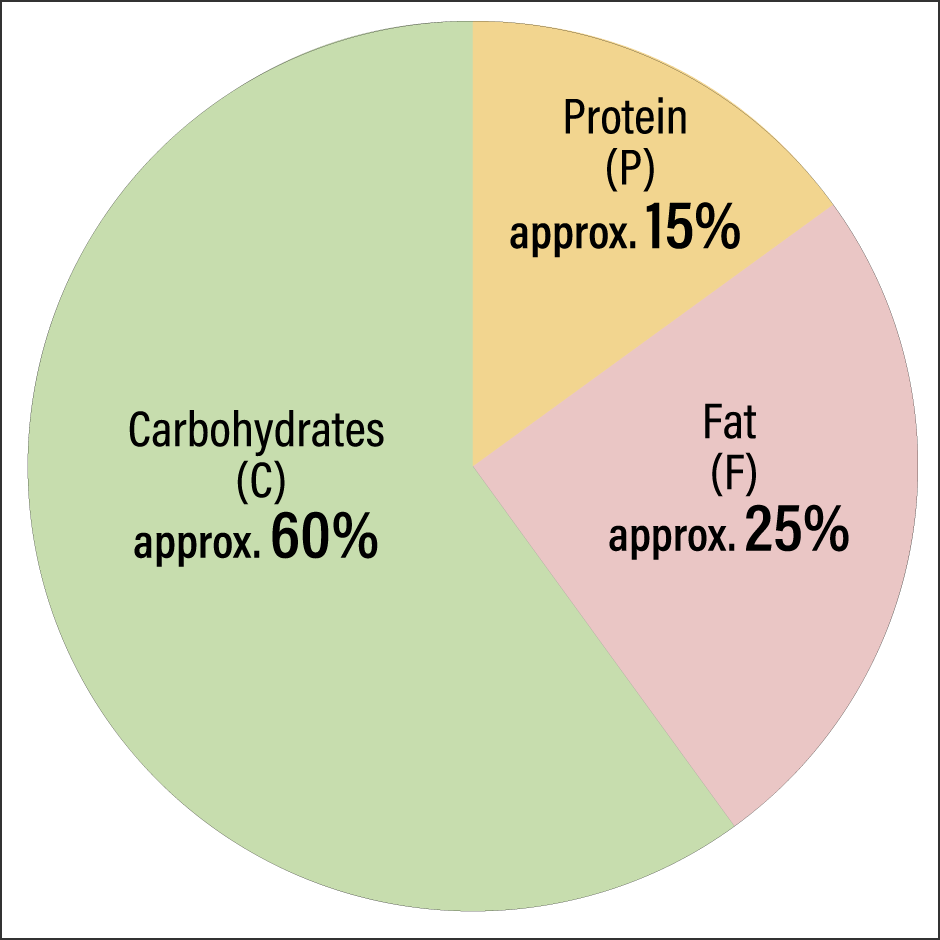
The PFC balance is a helpful concept when thinking about how much of each of the three macronutrients one should consume in one’s diet (Figure 1). This concept serves as an indicator for a healthy diet and shows roughly what proportion of the calories we consume should be accounted for by protein, fat, and carbohydrates in order to maintain the correct balance. Roughly speaking, the ideal proportion is 15% protein (P), 25% fat (F), and 60% carbohydrate (C). If we convert this into an actual meal, it is difficult to maintain the PFC balance by means of single dishes, such as donburi, a Japanese rice-bowl dish; instead, we recommend teishoku, a “set meal” consisting of several dishes. In other words, one can achieve the PFC balance and a sufficient intake of vitamins and minerals by combining staple food such as rice with a main dish of meat or fish, side dishes such as nattō (fermented soybeans) and ohitashi (boiled and seasoned vegetables), fruit, and milk or another dairy product.
 Modified with reference to Kazuhiro Uenishi. Eiyōgaku Hakushi ga Oshieru “Tanpakushitsu” no Saikō no Torikata [A nutritional scientist’s advice on the best approach to protein intake]. Taiyohtosho, 2022. p. 20.
Figure 1. The PFC balanceThe PFC balance is the proportion of the three macronutrients protein (P), fat (F), and carbohydrates (C), which serves as an indicator of a healthy diet. For example, in an 800 kcal meal, P should account for 120 kcal, F for 200 kcal, and C for 480 kcal.
Chicken breast and tenderloin have recently become popular among athletes wishing to increase their muscle mass, because they are low in calories and high in protein, and quite a lot of people seem to eat nothing else. However, as the balance of essential amino acids that comprise the protein found in meat and fish varies, my advice is to rotate one’s diet by eating a diverse array of types of meat and fish. I recommend that people get into the habit of checking their food intake on a weekly basis, thinking about what foods they have eaten that week.
Concerns about Japanese people’s low calcium intake
Although vitamins and minerals do not provide energy or form structural components of the body, they are essential to the regulation of various bodily functions and aid metabolism of the three macronutrients. As they are key nutrients that ought to be consumed in every meal, they are referred to in combination with carbohydrates, protein, and fat as the five macronutrients. The human body needs 13 vitamins and 13 minerals, all of which are essential.
For instance, if you increase your carbohydrate intake to avoid running out of energy when you exercise, you also need to boost your intake of vitamins correspondingly. To take an extreme example, eating rice and nothing else results in insufficient vitamin B1 intake, which leads to beriberi, a vitamin deficiency that causes heart failure and peripheral nerve damage. In my view, while it might not be severe enough to cause illness, a surprisingly large number of athletes fail to consume enough vitamin B1. If you feel easily fatigued and lacking in energy even though you eat a lot, it might be that your vitamin intake is too low.
In the case of minerals, stress fractures and anemia are problems often encountered as a result of intensive training, so it is absolutely vital for athletes to be proactive in consuming calcium to prevent fractures, and iron to ward off anemia. Calcium is one of my research topics, and I am concerned about the low level of calcium intake among Japanese people. The recommended daily intake of calcium for an adult male is 700–800 mg, while for an adult female it is 600–650 mg, but actual intake is around 500 mg. I would like to see people making a conscious effort to increase their calcium intake from a variety of foods, including calcium-rich milk and dairy products, small fish that can be eaten whole, such as smelt and dried young sardines, Japanese mustard spinach, spinach, and bok choy (Figure 2).
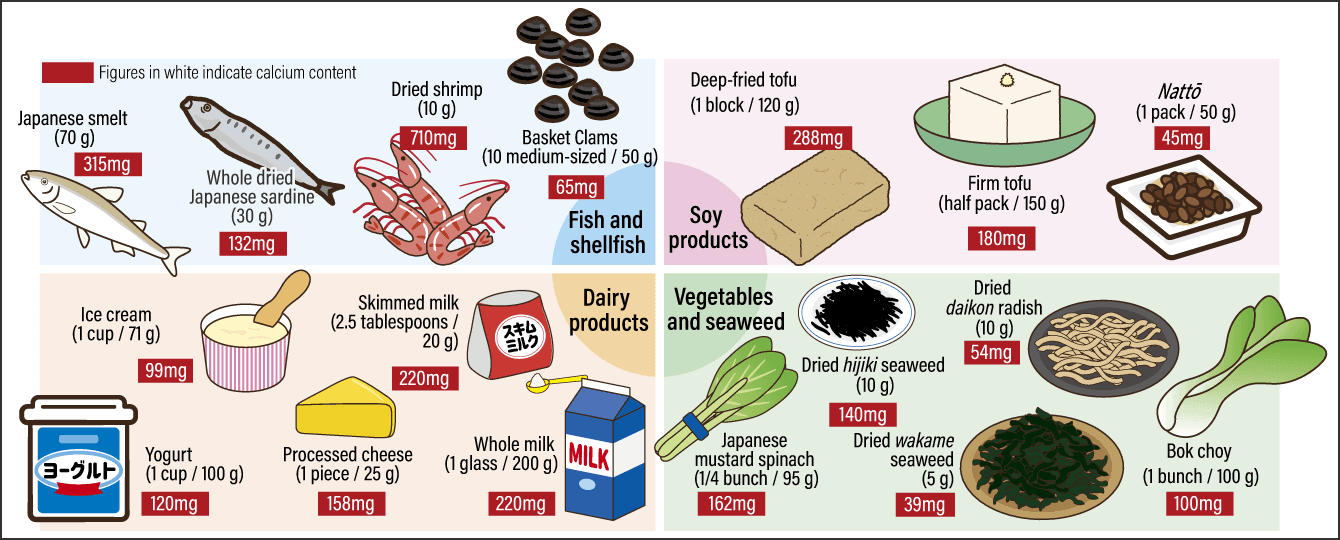 Prepared with reference to the Japan Osteoporosis Foundation leaflet “Calcium-Rich Foods” (in Japanese).
Figure 2. Calcium-rich foodsJapanese people’s calcium intake is quite a lot lower than the recommended level. There are various calcium-rich foods, so it is advisable to consciously strive to consume a diverse array of foods as part of your three meals a day.
Rehydration is just as crucial for athletes as nutrient intake. Sweating during exercise takes away water from the body; losing water equivalent to 2% of body weight causes the body to become dehydrated and reduces exercise capacity. If this dehydration progresses, the risk of heat stroke rises, so athletes in particular need to give full consideration to rehydration.
During school sports club activities back in the old days, coaches and senior students would tell us that we must not drink water during exercise. Although this instruction is criticized as overstepping the mark in coaching, the evidence suggests that it is not actually incorrect. Using water alone to replenish the water lost through sweating dilutes bodily fluids, so the body tries to maintain the concentration of bodily fluids by stopping its demand for more water, causing thirst to abate. Because the volume of bodily fluids cannot be increased, the body becomes more prone to muscle cramps and reduced stamina. This is likely the reason why we were told not to drink water during exercise. Since then, various sports drinks and ionic beverages containing water, sugars, and electrolytes such as sodium and potassium have been developed, so it is now recommended that people proactively rehydrate during exercise.
One thing you should check when using sports drinks is how much you are sweating during exercise. You can gain a rough idea of the volume of sweat you produce if you weigh yourself before and after exercise and estimate how much weight you have lost after exercise (Table). For example, if your weight has declined by 500 g after exercise, you can take that to mean that you have sweated out about 500 ml, so you should ensure that you drink 500 ml of a sports drink. If the volume of sweat that you produced is around 500 ml, you do not need to worry about diluting bodily fluids even if you simply drink water, but people who sweat a lot might produce 1–2 l of sweat, so I recommend sports drinks for them.
| Type of exercise | Intensity of exercise | Recommended water intake | ||
| Intensity of exercise(% of maximum intensity) | Duration | Before exercise | During exercise | |
| Track athletics, basketball, soccer, etc. | 75–100% | Up to 1 hour | 250–500 ml | 500–1,000 ml |
| Marathon running, baseball, etc. | 50–90% | 1–3 hours | 250–500 ml | 500–1,000 ml/hour |
| Ultramarathon running, triathlon, etc. | 50–70% | Up to 3 hours | 250–500 ml | 500–1,000 ml/hourEnsure you replenish salt as well |
Modified from Japan Sport Association, Guidebook for Prevention of Heat Stroke During Sports Activities (in Japanese).
Table. Types of exercise and recommended water intakeIt is vital to ensure that the amount of water lost through exercise does not exceed 2% of your body weight. You should take great care to rehydrate before, during, and after exercise. The table above shows recommended water intake based on the type, intensity, and duration of exercise. An ultramarathon is an ultra-long-distance footrace, such as those held over 50 km or 100 km, or taking place over 24 hours.
The composition of ingredients varies according to the different types of sports drinks, so the most suitable one will depend on the volume of sweat produced and the duration of exercise. The drinks most readily absorbed by the body are those that have been chilled to 5–15°C and have a salt content of 0.1–0.2% (40–80 mg of sodium per 100 ml). If engaging in continuous training for long periods in excess of an hour, you can replenish your energy levels with a drink that contains 4–8% sugars (4–8 g of carbohydrates per 100 ml). To ensure that you can diligently rehydrate before and after exercise, as well as while training, you should place your bottle of water or sports drink within easy reach, so that you can rehydrate whenever you want.
Important to avoid a reduction in muscle mass
I believe supplements are a very handy way of making it easier to consume nutrients that can be tricky to include in one’s diet. Top athletes have menus designed by dietitians to ensure efficient consumption of nutrients, but there are 13 kinds of vitamins and another 13 minerals, and one cannot tell which a person might be lacking without carrying out detailed tests. Accordingly, such athletes make good use of multivitamin and multimineral supplements. In the case of more everyday athletes intending to start taking supplements, I recommend those that simply add a little something overall, such as multivitamins and multiminerals.
I think many athletes who wish to increase their muscle mass drink protein powder dissolved in water. This is effective if you engage in full-scale strength training, but in everyday athletes who do not undertake systematic strength training, it does not help increasing muscle mass, but leads to fat being stored due to excessive energy intake, so I do not recommend it.
On the other hand, while dieting continues to be popular, it is important to be systematic about nutrition and exercise, to avoid losing muscle mass. In addition, the assumption that muscle mass declines as we age is incorrect and there are many elderly people who have not experienced a decline in muscle mass. As it is possible to gain muscle even as we age, you must not make age an excuse.
When it comes to bones, calcium consumption alone is not enough to strengthen them. Bones get stronger, the greater the load you place on them. The leg bones of long-distance runners are slender but firm. Rugby players have very thick, visibly sturdy bones throughout their body. I believe that subjecting bones to a greater burden through exercise while ensuring good calcium intake will make your bones stronger and help prevent fractures.
For middle-aged and older athletes who aim to extend their healthy life expectancy and continue engaging in sport throughout their lives, my advice is that pushing your body a little bit outside its comfort zone during exercise will make you healthier. Rather than ending your training session after running for 1 km, add an extra 100 m to your run. Giving it your all for a little more than you feel you can manage will make your heart and your body stronger than they are now. The same applies to diet: quite a few people take care to avoid overeating by stopping eating before they feel entirely full. However, adherence to the principle of moderate eating will reduce the kind of things you can do. Sometimes, you should eat as much as you want. Build a well-nourished body, strong bones and muscles, and results will follow.
(Figures courtesy of Kazuhiro Uenishi)