Securing a source of seawater is essential for marine fish aquaculture, placing substantial constraints on siting and water quality management. Developed by Okayama University of Science, Third Water is neither seawater nor freshwater, but a third kind of water: artificial breeding water that includes mainly three elements sodium, potassium, and calcium, enabling both marine fish and freshwater fish to be raised in the same environment. Third Water has been confirmed to reduce the risk of parasites and pathogens, while accelerating growth to 1.2–3.1 times the normal level by alleviating the burden of osmotic pressure adjustment. Efforts implement it in deserts and inland areas are progressing by combining it with completely closed recirculating aquaculture systems. Scientists are also looking at applied research focused on its use in food production in space.
Special Feature 1 – Japan’s Evolving Aquaculture Marine fish aquaculture without seawater is now possible!
composition by Yumi Ohuchi
Toshimasa Yamamoto
Associate Professor, Department of Bioscience, Faculty of Life Science, Okayama University of Science
Born in 1958 in Okayama Prefecture. In 1977, he joined the Corporate R&D Center of Mitsui Mining & Smelting Co., Ltd. In 1989, he set up a company specializing in aquarium design and water tank manufacture, becoming its representative director. He became head of the Aquarium Department at Okayama University of Science Specialized Training College in 2003, subsequently becoming an associate professor in the Department of Applied Chemistry and Biotechnology at Okayama University of Science’s Faculty of Engineering in 2009. He took up his current post in 2022. His work focuses on research and development and the practical implementation of onshore aquaculture technology using Third Water. He is a member of the Japanese Society for Aquaculture Science and the Japanese Society of Fisheries Science.
Marine fish live in the sea, while freshwater fish live in rivers. This may seem obvious, but you can see both types of fish swimming in Third Water, which we developed. As the name suggests, Third Water is neither seawater, freshwater, nor brackish water, but a third kind of water; specifically, it is an artificial breeding water whose composition has been adjusted to include the essential elements needed to raise both marine fish and freshwater fish.
Securing seawater is essential for marine fish aquaculture
Let us start with the question of what seawater actually is: it is water in which sodium chloride and other salts and minerals (inorganic components) have been dissolved. The salinity of normal seawater is around 3.5%, and our research findings show that it contains around 60 different minerals, excluding radioactive isotopes.
On the other hand, the only components added to Third Water are sodium, potassium, and calcium, in a basic ratio of 29:1:1, so it really is very simple (Figure 1). Its salinity is 0.5%–1%, which is lower than seawater, while its hydrogen ion concentration (pH) is around 7, making it neutral, so both marine and freshwater fish can live in it. In addition, as it can be produced merely by adding these components to groundwater, river water, or tap water, the basic composition can be fine-tuned with components suited to each type of fish or shellfish.
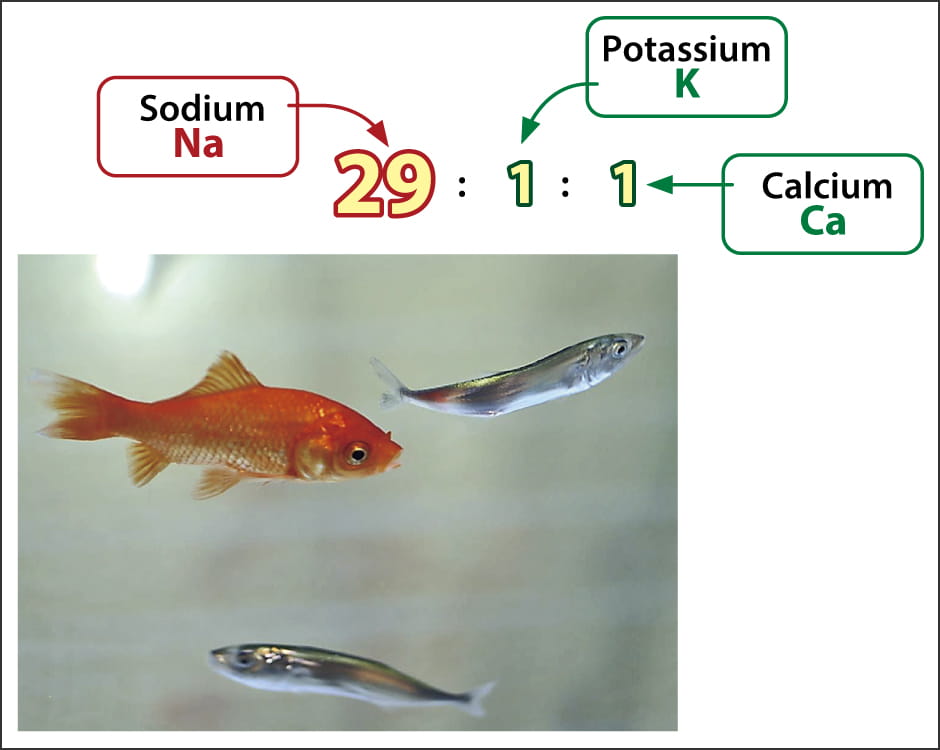
Figure 1. Composition of Third WaterThird Water has a salinity of 0.5%–1% and a pH of around 7, making it neutral. Japanese Spanish mackerel (marine fish) and goldfish (freshwater fish) can be seen swimming together.
Using a completely closed recirculating aquaculture system that circulates Third Water while filtering and sterilizing it, we have progressed from research into onshore aquaculture technology to its practical implementation, and have used it to farm more than 15 species of fish and shellfish to date (Figure 2). In the case of species such as Japanese pufferfish, bluefin tuna, Japanese Spanish mackerel, flounder, and sockeye salmon, we have used Third Water to raise them from fertilized eggs through the fry stage, and for some species, all the way to adulthood.
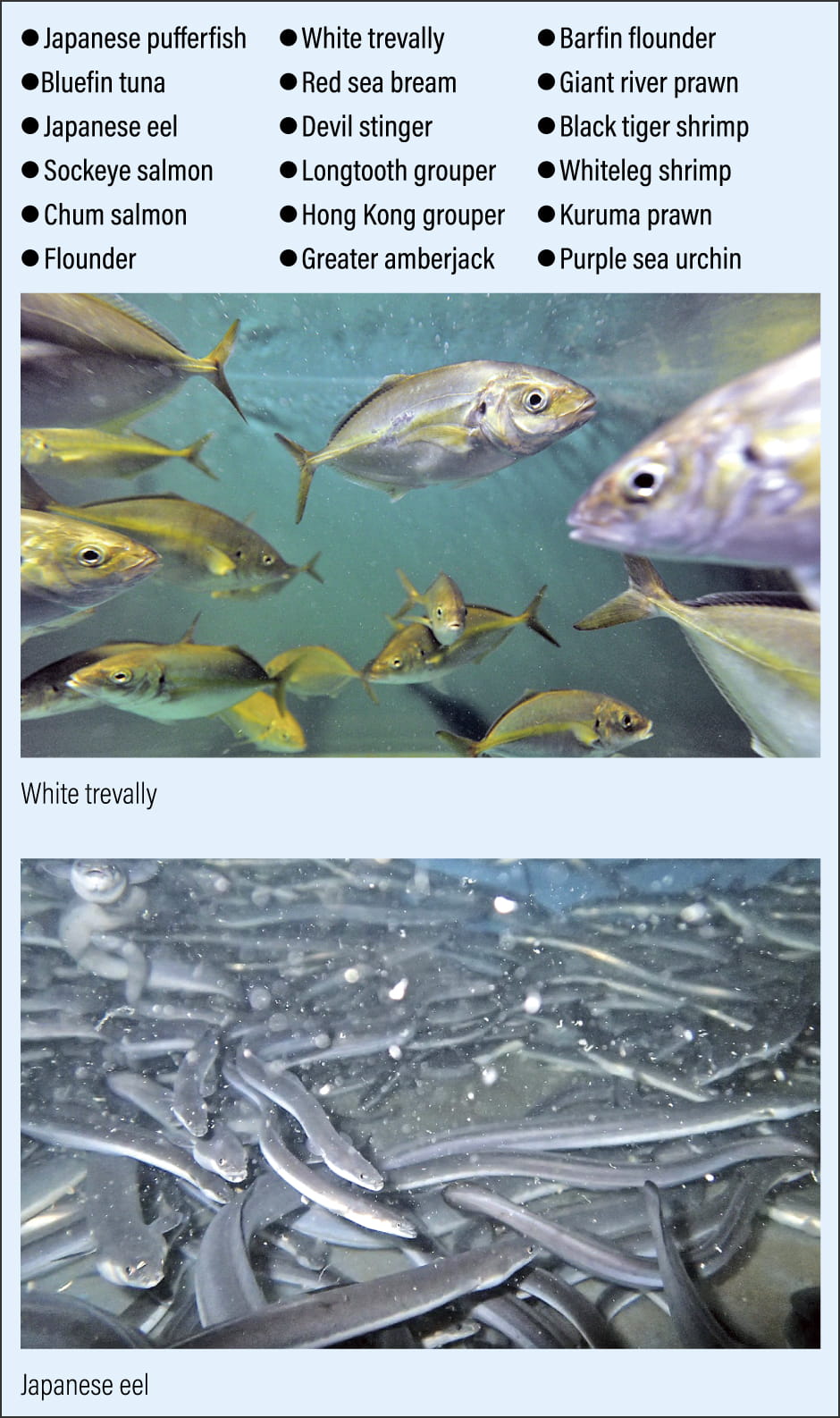
Figure 2. Examples of fish and crustaceans suitable for farming in Third WaterAquaculture is being developed primarily for fish with high market value and those whose wild populations are declining. Japanese eel is an endangered species that is considered difficult to farm.
Aquaculture using seawater or freshwater has been practiced since ancient times, while artificial seawater also came to be used in modern times. In conventional marine fish aquaculture, securing a source of seawater is essential, so farms are located in or near the sea.
One student’s experiment was the catalyst that enabled us to overturn the established notion that seawater is essential for marine fish. That experiment involved increasing the number of marine rotifer Brachionus plicatilis—which are used as feed for farmed fish—in freshwater. As rotifers are plankton that live in seawater and brackish water, one could readily imagine that they would not be able to reproduce in freshwater. However, our research facility is located in the mountains, and at the time, I had to procure seawater from the sea, around 25 km away. We were constantly short of seawater, to the extent that the students used to squabble with each other over getting hold of it. On top of that, cultivating zooplankton and phytoplankton for use as feed requires even more seawater than farming fish. Under these circumstances, he may have wanted to make use of the readily available freshwater.
Astonishingly, the rotifers proliferated in the water used for the first experiment, even though it was intended to be freshwater. However, they did not increase in number in the second experiment. As he investigated the reasons for this difference, he discovered that a tiny amount of seawater had remained in the first tank because it had not been cleaned properly. As a result, the water had an extremely low salinity. In other words, this suggested that marine organisms could survive even without seawater.
Human blood and cell composition provided clues
We went back and began to research seawater from its origins; we found that during the Devonian Period, around 400 million years ago, when fish are thought to have diversified, there was still no distinction between freshwater and marine fish, and that seawater was composed of simple components, leading us to infer that the salinity was also low. Today, seawater consists of many different elements, but not all of those elements are required for the biological activity of marine organisms, so we wondered whether only a limited number of elements might be essential. Based on this idea, we cultivated zooplankton in the form of L-type rotifer Brachionus plicatilis in freshwater into which we had dissolved elements that we thought would be useful, and found that the rotifers could reproduce.
However, when we applied this to fish, which was the whole point of the exercise, not only did they not reproduce, but they actually died off in no time at all. The fact was that the adjustment of elements needed to be more finely tuned for fish, as multicellular organisms, than for unicellular plankton. Accordingly, using sodium as the basic element, we conducted repeated experiments to evaluate the survival rates of fry that we raised under a huge range of different conditions, varying the types and proportions of minerals.
The failures continued to the extent that I had nightmares, with dead fish and chemical formulas appearing in my dreams every night, but human blood and cell composition provided us with clues. The inorganic components of human blood include sodium and numerous other minerals, which are said to reflect the fact that life originated in the sea. The inorganic components of cells, on the other hand, are principally potassium, calcium, and phosphate. Based on this fact, we thought that marine fish might also be able to survive in water with a limited number of elements, and gradually narrowed down the elements added. As a result, we confirmed that fish swam around vigorously in water consisting of the aforementioned elements, and continued to survive for three months or more.
This proved that marine fish could be raised even without seawater, but in order to make sustainable onshore aquaculture possible, we needed a system that would minimize effluent arising from replacing the water, and keep the water quality, osmotic pressure, and water temperature at an appropriate level while circulating the water. A particular issue when raising fish is that organic matter in excreta is broken down by bacteria into ammonia, nitrites, and then nitrates; once the nitrate concentration exceeds a certain level, the fish become anemic due to lack of oxygen and eventually die.
While nitrates can be broken down with the aid of chemical substances, these cost money and also raise safety concerns. Accordingly, we sought to use bacteria that break down nitrates (denitrifying bacteria), but there was no precedent for this in the aquaculture sector. We could not find any among the aquatic bacteria, so we focused on those in soil environments. This is because fields contain bacteria that break down nitrates derived from fertilizers. In the soil of a pesticide-free field, we discovered useful bacteria and applied them to a filtration technique. While incorporating this kind of harmful substance removal technology, we developed a unique, completely closed recirculating onshore aquaculture system that minimized the need for water replacement. In the case of bluefin tuna aquaculture, we have succeeded in maintaining the rearing water for 34 months without changing it (Figure 3).
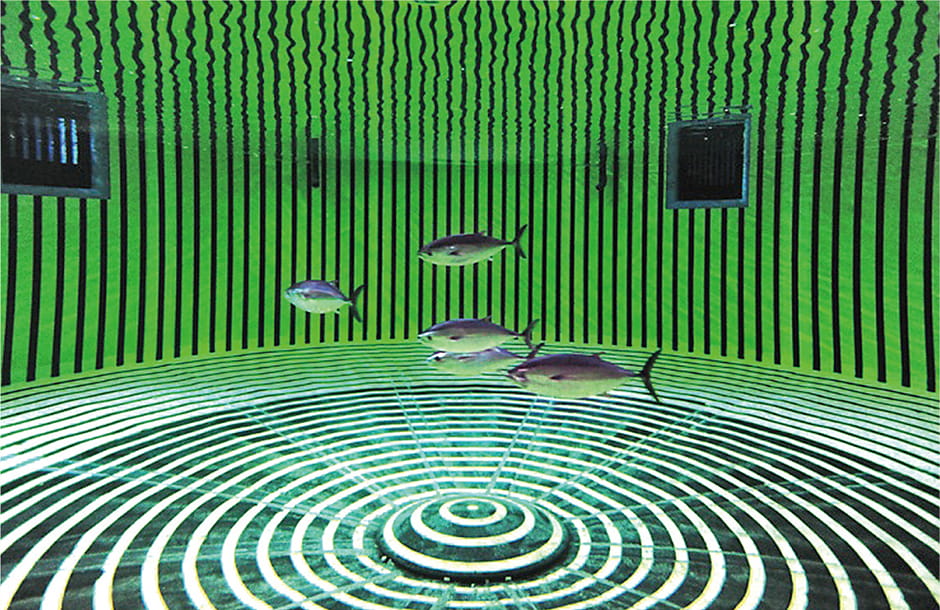
Figure 3. Farming bluefin tunaBluefin tuna swimming in a 140-t water tank at the Next-Generation Aquaculture Center. Juvenile bluefin tuna are vulnerable to stimuli, so raising them to adulthood presented many difficulties.
Another advantage: fewer diseases and parasites
We have discovered that the land-based aquaculture system using Third Water not only enables aquaculture to be carried out anywhere but also accelerates growth by 1.2–3.1 times in several fish species. For example, when we conducted a study to compare barfin flounder growth in natural seawater and Third Water, we found that they grew about 1.3 times faster when raised in Third Water than when raised in natural seawater (Figure 4). In addition, genetic analysis showed that the amount of heat shock protein 70 expressed in red sea bream—which increases when fish are subject to stress—was about 60 points lower in the group kept in Third Water than in the group kept in seawater.
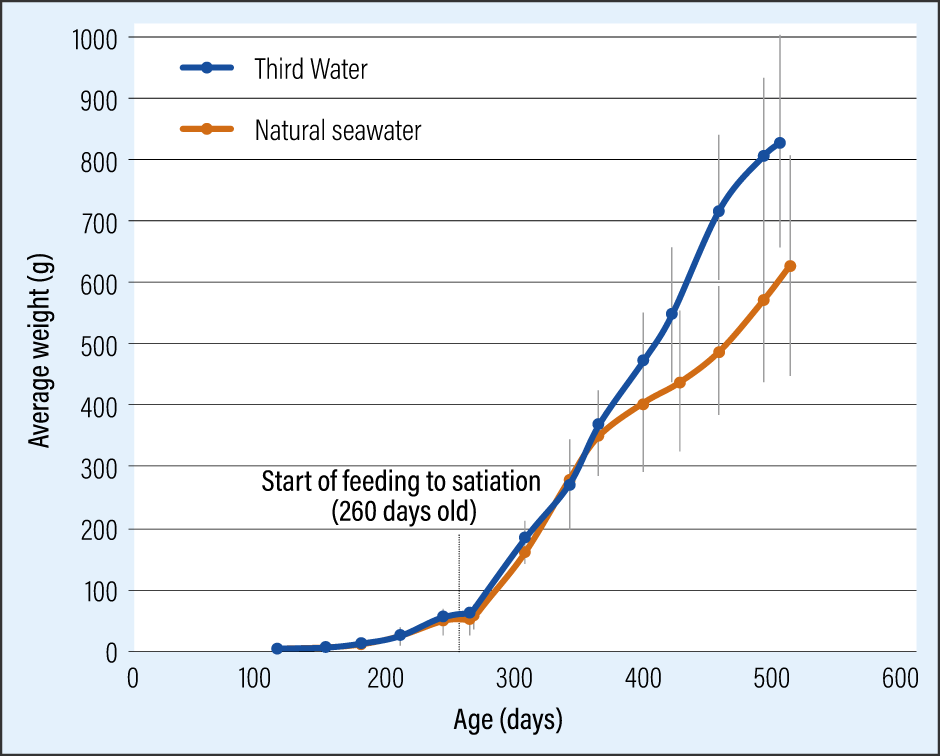
Figure 4. Experiment comparing the growth of barfin flounder in natural seawater and Third WaterBarfin flounder are marine fish and members of the family Pleuronectidae, found mainly in Hokkaido and the Tohoku region of northeastern Japan. The research team found that barfin flounder raised in Third Water grew faster than those raised in seawater and were particularly well suited to closed recirculating aquaculture using Third Water among cold-water fish species.
The reasons for the results of these studies are connected to osmotic pressure adjustment in fish. To prevent moisture within their bodies from escaping outside, marine fish drink seawater to replenish their moisture levels while adjusting their osmotic pressure. At the same time, because seawater contains a great deal of minerals, the excess minerals ingested into their bodies are excreted mainly through the gills and kidneys. As these osmotic pressure adjustments use a great deal of energy, they impose a great burden on fish. Third Water has low salinity and no unnecessary minerals, so it reduces the energy required for osmotic pressure adjustment and alleviates stress, and consequently speeds up growth. Another interesting thing is that we have confirmed a phenomenon in Third Water whereby the apical region of chloride cells, which are found in the gills and adjust the salt concentration in the body, disappears. This, too, suggests the possibility that the metabolic burden of osmotic pressure adjustment is alleviated in Third Water.
Another major advantage is that Third Water contains no pathogens, such as naturally derived bacteria and protozoa, so diseases and parasites do not readily occur. For example, it is widely known that Anisakis parasites that infest fish such as salmon cause a disease called anisakiasis if humans eat fish containing the parasites without adequate heating or freezing of the fish beforehand. However, Anisakis infestation of salmon raised from eggs in Third Water has not been observed. Similarly, pufferfish toxin also stems from bacteria in seawater, but no toxicity has been detected even in the livers of pufferfish raised from wild eggs in Third Water. Furthermore, in the completely closed recirculating aquaculture system, water quality management is easy, because 99.5% less ammonia is generated—which is deadly to fish—is generated, unlike in the case of fish raised in seawater. This means that fish can be farmed at high densities while maintaining food safety, thereby improving productivity as well.
It goes without saying that taste is also key when it comes to farmed fish. Bluefin tuna, Japanese eel, sockeye salmon, and other fish farmed with this system that have been shipped to market have met with a positive response. The Japanese eel has been particularly well-received, and I myself noted that the flesh was soft and sweet, with no unpleasant odor. When we compared the amount of fat with that of wild eel, the farmed eel has around 1.4 times as much fat.
We have rolled out aquaculture using Third Water beyond our facility to research institutes and local governments within Japan, and even to sites overseas. In Thailand and Cambodia, we have conducted aquaculture experiments using prawns, while in a desert region of Mongolia, we conducted the first aquaculture experiment using marine fish (hybrid grouper). Although there are several challenges, including securing water and the electricity required to operate aquaculture facilities, creating systems tailored to the local environment has enabled our experiments to succeed, and we are discovering possibilities for establishing this kind of aquaculture as an industry.
We are also conducting research into aquaponics, which involves cultivating plants while also farming aquatic organisms. With its low salinity, Third Water has the advantage that even water in which marine fish have been kept can readily be repurposed for hydroponic cultivation; to date, we have succeeded in cultivating more than 10 types of vegetables.
Our next goal is space aquaculture. The Artemis program, a crewed space exploration program led by NASA in the U.S., is currently underway and aims to establish a base on the Moon’s surface that could support long-term habitation and serve as a hub for space development. The major challenges to doing so will be securing energy, water, and food. To meet energy needs, power generation using small nuclear reactors is planned, while water has been confirmed to exist on the Moon as ice and as individual water molecules.
Aquaculture under hypergravity and microgravity
We believe that our onshore aquaculture system can contribute to the production of fish and plants at a lunar base because it can go for long periods without water exchange and can easily be applied to aquaponics. Accordingly, in partnership with the Faculty of Information Science and Engineering at our university, we first simulated the environment on the International Space Station (ISS) and have begun aquaculture experiments aimed at producing fish from eggs, larvae, or fry in simulated microgravity. This is because farming fish that have already reached adulthood would involve enormous transportation costs. To date, we have observed red sea bream hatching in hypergravity, and flounder eggs hatching and larvae swimming in microgravity. Furthermore, in both hypergravity and microgravity environments, we have confirmed that whiteleg shrimp metamorphose from the prezoea stage (an extremely brief stage immediately after hatching) into juvenile shrimp, and that juvenile kuruma prawns exhibit feeding behavior (Figure 5). In addition, we ascertained that the plankton used as feed in the initial stages can be cultivated and grow without problems in both hypergravity and microgravity.
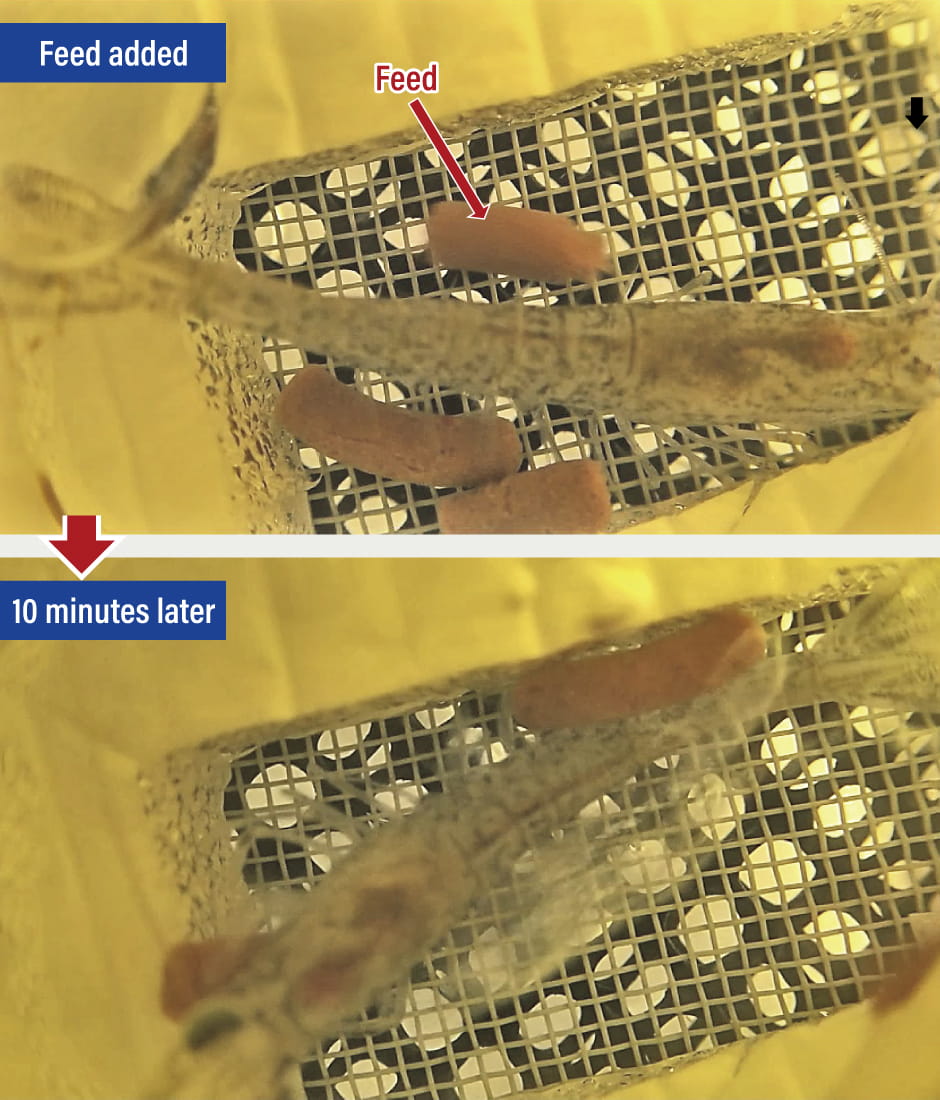
Figure 5. Feeding behavior of kuruma prawns in microgravityThe research team confirmed that juvenile prawns exhibited feeding behavior in a device called a clinostat that they developed to simulate an environment close to microgravity.
These experiments resulted in the world’s first observations of these phenomena, serving as a glimpse into the future of space aquaculture. They demonstrated that, even in microgravity and the hypergravity conditions during launch, fish and crustaceans can feed and develop properly, and that plankton can similarly be cultivated and grow; these are very important points, because fish and crustaceans are vulnerable to stimuli in their larval stage. In the kuruma prawn experiment, the results of an analysis of gene expression levels revealed the possibility that prawns’ exoskeletons might become thinner. It is a well-known fact that humans suffer bone loss in microgravity environments. This marked the first time in the world that anyone had confirmed a phenomenon indicating the possibility that similar changes might also occur in crustaceans.
Space aquaculture experiments have only just begun, and we still face a mountain of challenges. However, looking back, although our development of Third Water was also a continuous process of trial and error, we succeeded in putting it into practical use. The driving force behind this was innovation—the desire to create new value without being constrained by conventional wisdom or limitations.
Today, students continue to approach their research with a clear sense of purpose. Looking ahead to the next generation, we will continue our research into further expanding the possibilities of Third Water.