

The rise in temperatures shows no sign of stopping. Japan is beset by such high summer temperatures each year that the expression “record-breaking heat“ has already become a cliché, and severe health impacts are becoming clearly visible. The number of heat stroke deaths has surged, surpassing the 2,000 mark in 2024. This is 5.5 times the number of deaths due to natural disasters. Furthermore, the number of heat-related deaths—deaths due to the exacerbation of pre-existing conditions such as heart disease or respiratory illness triggered by the heat—is estimated to be about seven times the number due to heat stroke. Excessive heat has serious effects on health and a variety of diseases. Scientists say that initiatives covering society as a whole are crucial, as it is no longer possible to avoid these effects through individual efforts alone.
Special Feature 1 – Climate Change and Health Risks Rising temperatures are becoming a serious issue! How will our health be affected?
composition by Yuko Watanabe

Masahiro Hashizume
Professor, Department of Global Health Policy, Graduate School of Medicine, The University of Tokyo
In 2007, he successfully completed a doctoral program at the London School of Hygiene and Tropical Medicine in the UK, and was awarded a Ph.D. In 2012, he became a professor at Nagasaki University’s Institute of Tropical Medicine, and concurrently served as a professor at the university’s School of Tropical Medicine and Global Health before assuming his current position in 2019. His research interests are global health, planetary health, environmental epidemiology, and climate change. He has held a number of key positions, including lead author of the Working Group II contribution to the Intergovernmental Panel on Climate Change (IPCC) Sixth Assessment Report, member of World Health Organization (WHO) technical advisory groups, and expert member of the Ministry of the Environment’s Central Environment Council (Expert Committee on Climate Change Impact Assessment).
The summer of 2025 saw Japan beset by even more record-breaking intense heat than the previous year. Temperatures also rose worldwide, with heat waves in every corner of the globe hitting the headlines.
In collaboration with scientists around the world, the Intergovernmental Panel on Climate Change (IPCC)—an intergovernmental organization set up in 1988 by the World Meteorological Organization (WMO) and the United Nations Environment Programme (UNEP), a subsidiary organ of the UN—publishes periodic reports based on peer-reviewed scientific literature, providing the scientific foundations for each country’s government policies on climate change.
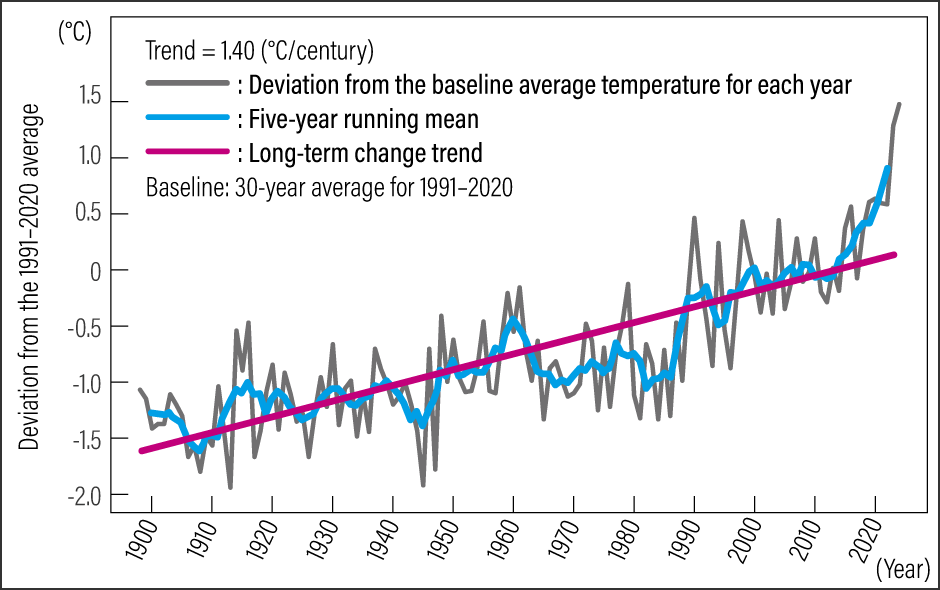
The Sixth Assessment Report, which was published by the IPCC in 2021, states that the global average temperature has risen by 1.1°C compared with that seen before the Industrial Revolution, which occurred from the mid-18th to the 19th century. This is a level of warming never before experienced by humanity, and it is rising with each passing year; indeed, some research reports even state that the temperature had risen by 1.55°C by 2024. The IPCC states that it is unequivocal that warming is caused by human activities. Japan’s annual average temperature has risen at a rate of 1.4°C per 100 years, with a succession of heat waves since the 1990s. This increase is greater than the global average temperature rise, and the marked severity of the heat is plain to see (Figure 1).
 Compiled based on the JMA’s Annual Japan average temperature anomalies (1898–2024)
Figure 1. Annual Japan average temperature anomaliesThe deviation from Japan’s baseline average temperature (30-year average for 1991–2020) in 2024 was +1.48°C. This was the highest figure since statistics began in 1898. Japan’s annual average temperature has been rising, with high-temperature years occurring frequently since the 1990s.
The world as a whole, including Japan, has set a target of keeping the rise in temperature during the current century to less than 1.5°C above the pre-Industrial Revolution level, and scientists estimate that it will be necessary to cut greenhouse gas emissions to zero by the middle of this century in order to achieve this goal.
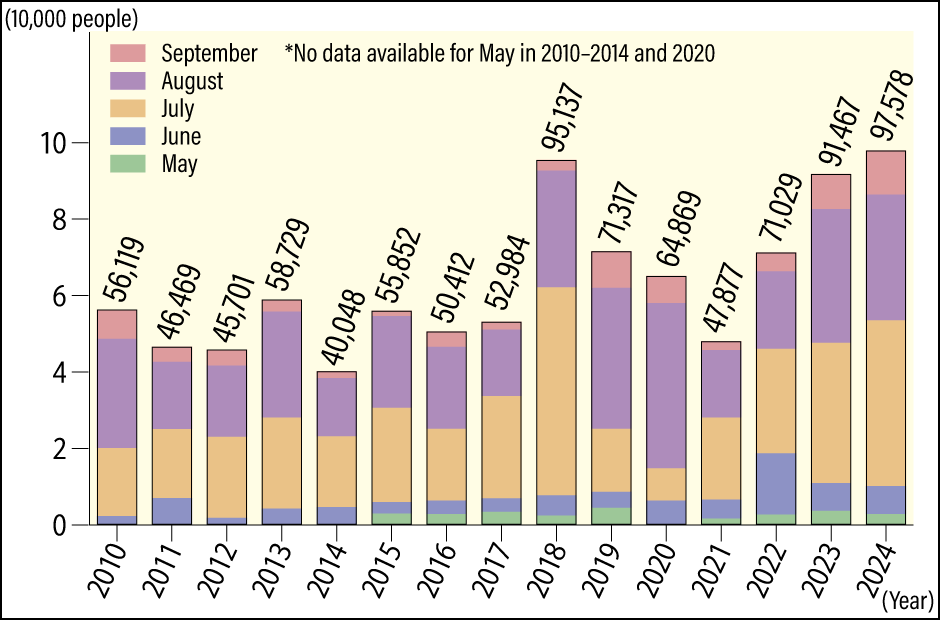
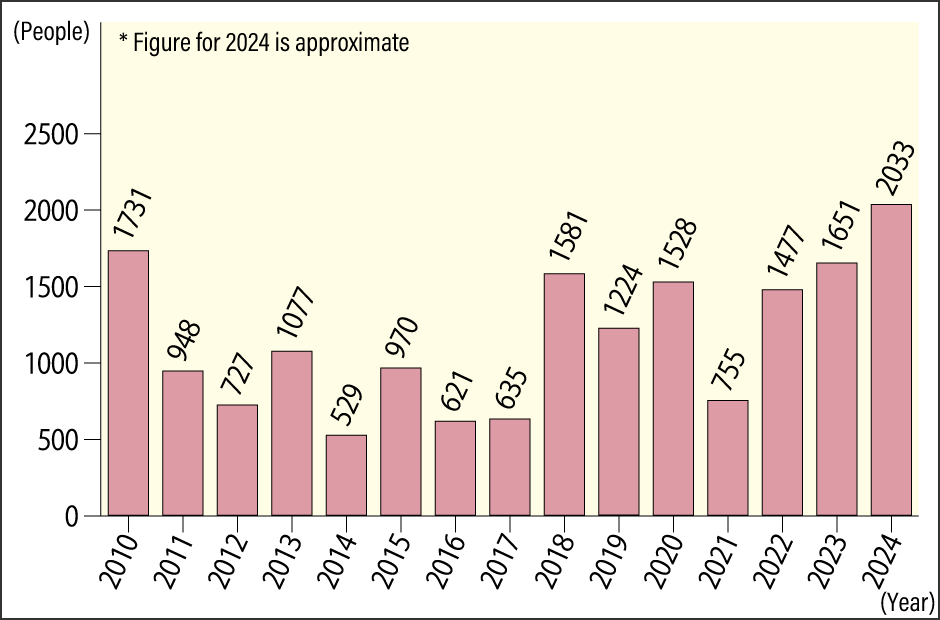
The health impacts of rising temperatures are serious, with elderly people particularly vulnerable to the heat. Figures for the number of people in Japan transported by ambulance between May and September due to heat stroke are published annually by the Ministry of Internal Affairs and Communications (MIC); in 2024, the figure reached a record high of 97,578 (Figure 2). I believe that another new record will be set in 2025. The number of heat stroke deaths is also on the rise, reaching 1,651 in 2023 and surpassing the 2,000 mark to 2,033 (approximate figures for June to September) in 2024, with around 80% of these accounted for by elderly people (Figure 3).
 Compiled on the basis of the Fire and Disaster Management Agency, Ministry of Internal Affairs and Communications, Overview of Ambulance Transport Due to Heat Stroke
Figure 2. Number of people transported by ambulance due to heat stroke
 Compiled from the Ministry of Health, Labour and Welfare, Vital Statistics of Japan
Figure 3. Number of deaths due to heat stroke
Heat waves are occurring more frequently in Japan during summer; both the number of people transported by ambulance due to heat stroke and deaths caused by heat stroke are rising, with heat-vulnerable elderly people accounting for 80% of these deaths. In particular, to prevent heat stroke in elderly people living alone, efforts to ensure monitoring by family members, friends, and local government—as well as financial support for rising electricity costs—appear to be needed.
5.5 times higher than deaths from natural disasters
It is probably hard to conceive of the fact that as many as around 2,000 people die during this four-month period of the year, but comparison with Ministry of the Environment figures for the number of fatalities from natural disasters such as heavy and torrential rains, sediment disasters, typhoons, snow disasters, and earthquakes reveals that the number of heat stroke deaths is about 5.5 times higher. I believe it will be important in future to recognize that heat and heat waves are also natural disasters from the perspective of health considerations.
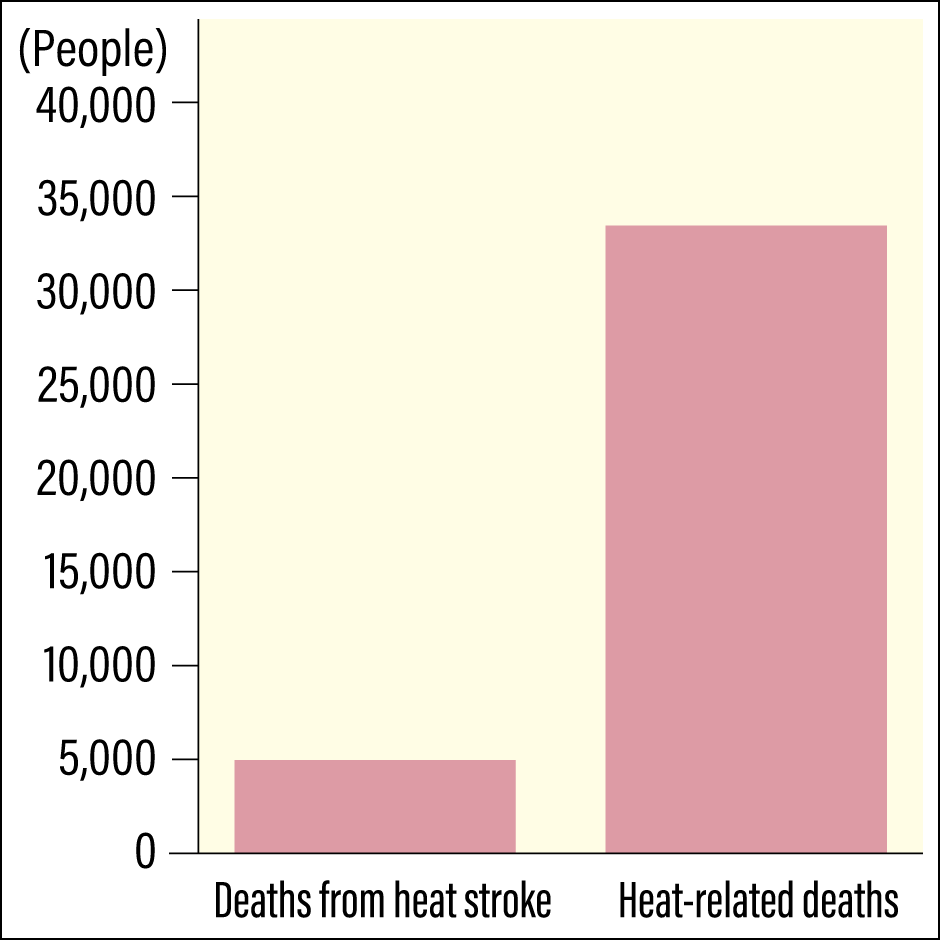
In terms of the health impacts of heat, not only heat stroke, but also heat-related deaths triggered by high temperatures are now coming under close scrutiny. Scientists believe that among those who have died of heart disease or respiratory illness are quite a few people who have died because the heat worsened their pre-existing conditions. Heat makes people sweat, which reduces the amount of water in the body, so the heart has to work harder to circulate the blood; if someone has a pre-existing heart condition, for example, their cardiac function will decline further, which could cause heart failure that might even be fatal. In our research, we estimate that heat-related mortality is about seven times higher than the number of heat stroke deaths, which means that heat-related deaths are a major problem (Figure 4).
 Yuan L, et.al., Environ Health Perspect. 2023;131:127008.
Figure 4. Heat stroke mortality and heat-related mortalityHeat stroke is not the only impact that heat has on health. A study by Professor Hashizume’s team found that, during the five-year period from 2015 to 2019, the number of deaths due to heat stroke was 5,031, whereas the number of heat-related deaths was estimated to be around seven times higher, at 33,467.
Studies show that pregnant women and people with lifestyle diseases such as obesity, diabetes, and high blood pressure need to be particularly careful in the heat, as they have a higher risk of death than healthy individuals. Focusing on heat stroke alone will lead to the health impacts of heat being underestimated, so caution is required.
When our research team estimated how much higher than the current level heat-related deaths would be by the end of this century, we found that, after taking the future decline in the Japanese population into account in our calculations, the figure was expected to more than double across all Japanese prefectures if temperatures rose by 2.7°C compared with the level before the Industrial Revolution. While the extent of the temperature rise tends to be higher in the Tohoku and Hokkaido regions of northern Japan, the overall figure is likely to more than double.
The number of emergency ambulance dispatches is also expected to be between 1.3 times and three times higher. Looking at the increase in the number of dispatches across a whole year, there are two peaks, one in winter and the other in summer, and there has been an obvious seasonality, with the winter peak being the higher of the two. However, our research has revealed that as warming causes temperatures to rise, this pattern will reverse, with the winter peak declining and the summer peak overtaking the winter peak. These estimates are based on scenarios where no measures are taken to address greenhouse gas emissions, and temperatures rise by around 2°C, 3°C, 4°C, and 5°C. While this picture is merely based on scenarios, we believe it to be entirely within the realm of possibility.
We are pursuing our research via a variety of simulations, including such questions as whether there will be enough ambulances under the current emergency ambulance dispatch system to cope with envisaged future climate change, and whether the medical facilities that accept emergency patients will be put under pressure. Our research has indicated the possibility that ambulance operating rates will exceed 100% during the current century, but rather than simply increasing the number of ambulances, it would be preferable to rethink approaches to the emergency medical care system as a whole, including motivations to further encourage proper use of ambulances.
The mosquitoes that transmit dengue virus are moving northwards
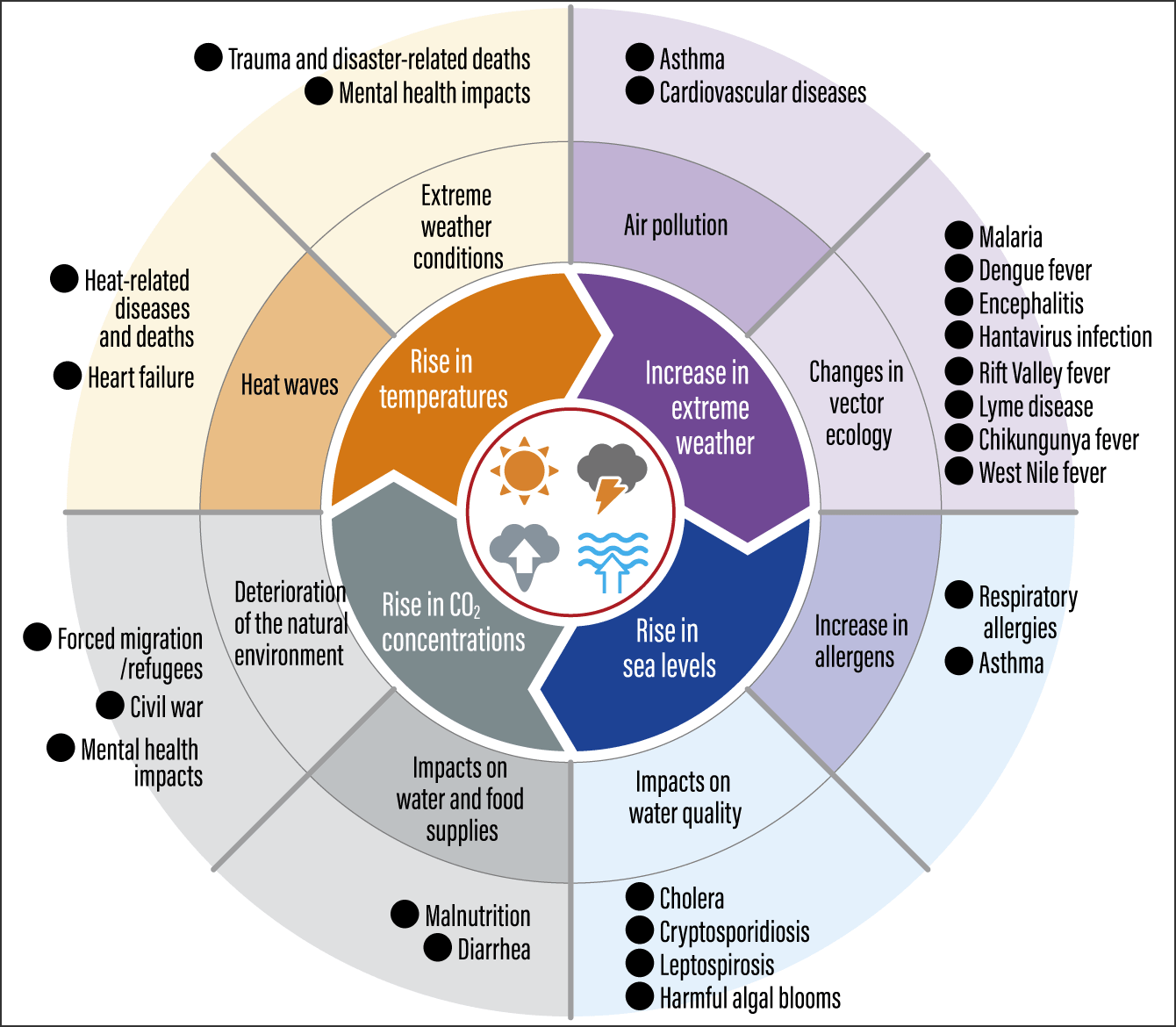
Climate change will impact various aspects of people’s health, including infectious diseases, allergic diseases, and mental health (Figure 5). For example, warming will expand the habitats of vector mosquitoes, raising the possibility that areas surrounding current dengue fever and malaria endemic regions, may themselves become endemic. In Japan, too, the habitat of the Asian tiger mosquito (Aedes albopictus)—a vector of the dengue virus, which is the pathogen that causes dengue fever—is moving northwards: the northern limit of these mosquitoes in the 1950s was the northern Kanto region, but their larvae were detected in Aomori City in 2015. While there have been no confirmed reports in Hokkaido, it is feared that the area might become habitable for them if warming continues at the current pace.
 Modified with reference to U.S. Centers for Disease Control and Prevention (CDC), Effects of Climate Change on Health
Figure 5. Assorted health impactsClimate change manifests not only as heat waves and extreme weather conditions but also in a variety of other forms. These phenomena have a greater impact on our health than might be imagined, including the exacerbation of pre-existing conditions and the onset of new diseases.
The majority of dengue fever patients in Japan are imported cases in travelers who have been infected while visiting endemic areas overseas and have gone on to develop symptoms after returning home. However, 2014 saw 162 reported cases of domestic infection, primarily around Yoyogi Park, which demonstrated that there actually is a risk of transmission within Japan via vector mosquitoes. Furthermore, the recent rise in foreign tourists is thought likely to have increased the potential risk that dengue virus brought into the country by infected people from endemic areas will lead to an outbreak spread via Asian tiger mosquitoes that inhabit Japan.
In addition, warming is increasing the amount of water vapor in the atmosphere, causing more short-duration heavy rains (rain squalls). Localized torrential downpours caused by linear rainbands have repeatedly occurred in recent years, leading to an escalation in flooding and sediment disasters. While the potential for occurrence in Japan is low, it is recognized internationally that the risk of waterborne infectious diseases such as cholera and leptospirosis increases when flooding causes sewage treatment capacity to be exceeded, leading to the pollution of water for drinking and other household uses.
Furthermore, in developing countries in regions such as sub-Saharan Africa and South Asia, it is not uncommon for children in particular to lose their lives from malnutrition as a result of soaring food prices due to falling cereal output caused by heat waves, unusually cool summers, or torrential rain, among others. Malnutrition and diarrheal diseases are closely related: diarrheal diseases reduce the body’s ability to absorb nutrients, making them more prone to malnutrition, which is a life-threatening factor for humans.
Seasonal allergic diseases, too, are affected by rising temperatures. To take the example of hay fever, Japanese cedar pollen has been found to disperse in February or thereabouts in normal years, but there is a possibility that it could disperse even earlier. For instance, if the pollen began to disperse in December, the hay fever season might become longer.
Considerable evidence about the effects of heat on mental health has accumulated over the last five years or so. Increasing severe torrential rain, floods, and typhoons will cause more damage, which could result in people suffering injuries, losing family or friends, and losing their homes or other property; post-disaster mental health is therefore a serious issue. Aside from large-scale disasters, it appears that many people are complaining of low mood and depressive symptoms as a result of ongoing heat waves.
There are studies showing that sleep duration falls when temperatures rise, as people find it difficult to get to sleep on sweltering nights, which means they fall asleep later and therefore spend less time asleep. This affects their mood and mental condition the following day, with reduced concentration likely also causing labor productivity to fall. While the mechanism is unclear, it would appear that human emotions are closely related to heat.
Measures relying on air conditioners will soon reach their limits
A report published by the World Health Organization (WHO) in 2014 estimates that the number of excess deaths due to warming between 2030 and 2050 will reach approximately 250,000 per year. This breaks down to 96,000 due to undernutrition, 60,000 due to malaria, 48,000 due to diarrhea, and 38,000 due to heat stroke and other heat-related deaths. I believe that the figure might be even higher in reality, as it does not include natural disasters or mental health impacts.
The Ministry of the Environment’s Expert Committee on Climate Change Impact Assessment (now the Subcommittee on Climate Change Impact Assessment and Adaptation) uses three indicators for assessing impacts in Japan: significance, urgency, and confidence. Impact assessments are revised every five years, with the third edition due to be published before the end of 2025. If we focus on the health sector in the report published in 2020, we can see that all three indicators are rated high for both sub-categories of the heat stress category, namely heat illness and risk of mortality due to heat stroke. The report also calls for caution in regard to arthropod-borne infectious diseases (such as dengue fever) and impacts on vulnerable populations (elderly, children, persons with underlying health conditions, etc.), rating the significance and urgency indicators high for these sub-categories.
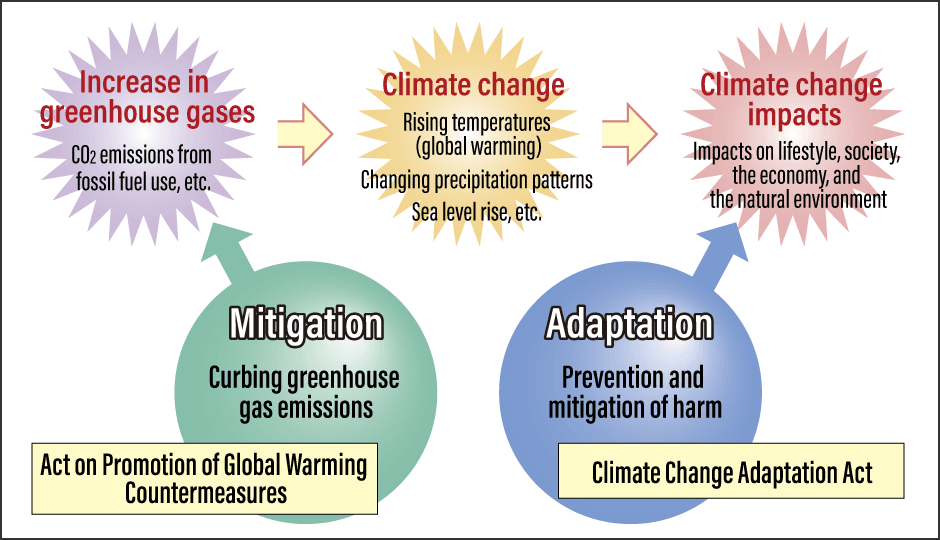
In the case of climate change issues such as these, it is vital to pursue tandem approaches as integral halves of the same whole, by implementing both mitigation measures to stop warming by curbing greenhouse gas emissions, and adaptation measures that seek to minimize harms by changing our social systems, lifestyles, and behaviors to suit rising temperatures (Figure 6).
 Compiled on the basis of Ministry Liaison Conference on Heatstroke materials
Figure 6. Mitigation and adaptationEven if greenhouse gas emissions are reduced to zero, warming will not stop for another few decades. Adaptation measures—based on behavioral change and shifts in social systems—are also essential.
The Japanese government formulated the Heat Illness Action Plan in 2021, and in May 2023 released a plan that set a medium-term target of halving deaths due to heat stroke from the current level. In 2021, the Japan Meteorological Agency (JMA) and the Ministry of the Environment began jointly issuing Heat Stroke Alerts nationwide as a measure to reduce such deaths. It will be challenging to halve the number of deaths due to heat stroke using such measures. Aside from providing information in the form of Heat Stroke Alerts, efforts currently being undertaken at the government level include the development of cooling shelters—public facilities equipped with air conditioning—that anyone can use, and local government financial assistance for the cost of installing air conditioning in elderly people’s homes.
However, these measures are predicated on the use of air conditioners. While air conditioners are very effective at preventing heat stroke, and we should not hesitate to use them regardless of whether climate change is occurring or not, I believe it will not be long before we reach the limits of measures that are overly reliant upon air conditioners. Looking at the situation in the medium to long term, the electricity used by air conditioners causes an increase in CO2 emissions from electricity generation, thereby contributing indirectly to warming. At the same time, if electricity consumption is concentrated on hot days, the risk of power outages may increase, which could compromise the functions of society as a whole. We must understand that heat stroke countermeasures that are overly dependent on air conditioners are actually risky.
When it comes to dealing with climate change issues, it seems unlikely that individual efforts alone will be sufficient to substantially reduce heat stroke mortality in the event that the unprecedented heat being forecast comes to pass. It will be vital for society as a whole to address the issue by combining a variety of measures. For example, society as a whole will need to explore lifestyles and ways of working that enable us to avoid exposure to heat as far as possible during the hottest part of summer, and will also need to constantly verify whether or not the various measures are valid.
Climate change affects not only the health of those of us alive today, but also the ability of future generations to live their lives healthily. I would like everyone to think afresh about the fact that protecting the environment helps to protect our health, and to take action accordingly.