
Although myxomycetes (plasmodial slime molds) are unicellular organisms, they are distinguished by a unique ecological feature in that they grow to huge sizes while remaining a single cell. Even more astonishingly, they can accurately distinguish self from non-self. Even within the same species, plasmodia from different localities may spend several hours assessing one another and, if they are incompatible for fusion, move apart without fusing. They can also distinguish compatible from incompatible individuals without direct contact, apparently using signaling substances in the secreted slime sheath. Understanding allorecognition (self–non-self recognition) in myxomycetes may help clarify the evolutionary origins of multicellularity and what constitutes “self” in an organism.
Special Feature 1 – The Hidden World of Slime Molds The bizarre ability of myxomycetes to recognize self and non-self
composition by Rie Iizuka

Mana Masui
Doctoral program, Graduate School of Media and Governance, Keio University
Born in Tokyo in 2001. He encountered myxomycetes (plasmodial slime molds) at the age of five and began raising wild plasmodia from the age of six. At seven, he started conducting research into them, and he has been working to shed light on allorecognition in myxomycetes since the age of nine. He first had a paper published in an international journal at the age of 17. He published the book Sekai wa henkeikin de ippai da [The World Is Filled With Slime Mold] (Asahi Press) when he was 16, followed by Henkeikin mikusobāsu [MYXOVERSE — The World of Slime Molds] (Shueisha) when he was 20. He has received numerous awards, given many lectures, contributed numerous articles, and made frequent appearances in the media.
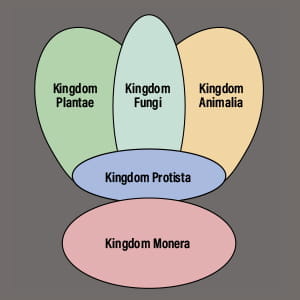
While myxomycetes are also called slime molds, the term slime mold is applied not only to myxomycetes (true slime molds), but also to organisms such as cellular slime molds. The “mold” element of their name is a relic of the fact that they were formerly thought to be fungi, but today they are classified as Amoebozoa (amoeba-like organisms), which are neither plants, nor animals, nor fungi.
The myxomycetes on which my research focuses live in damp places sheltered from direct sunlight. As well as in forests, of course, myxomycetes can also be found in towns, around the bases of street trees and on fallen leaves that have built up in roadside drainage ditches (Figure 1).
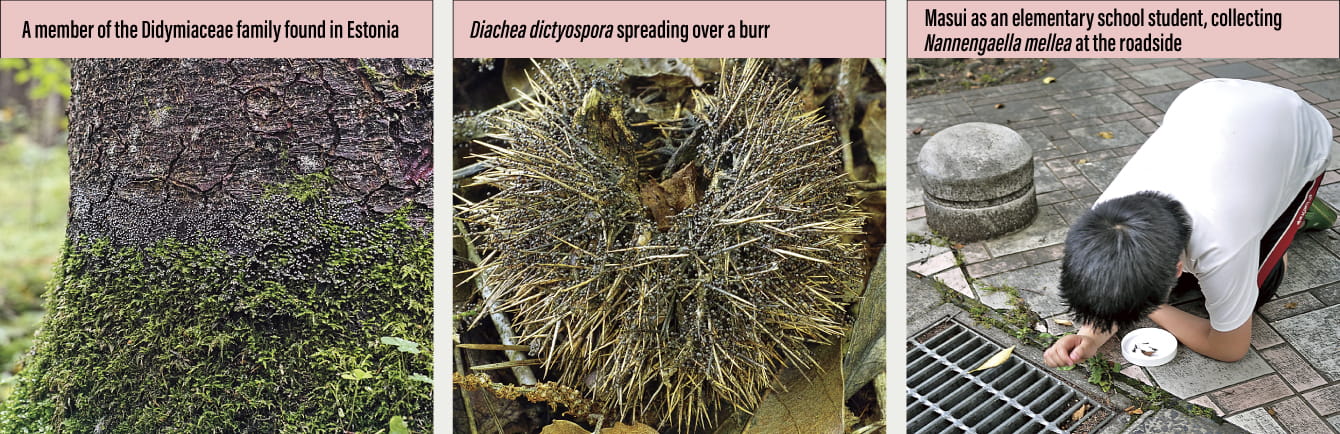
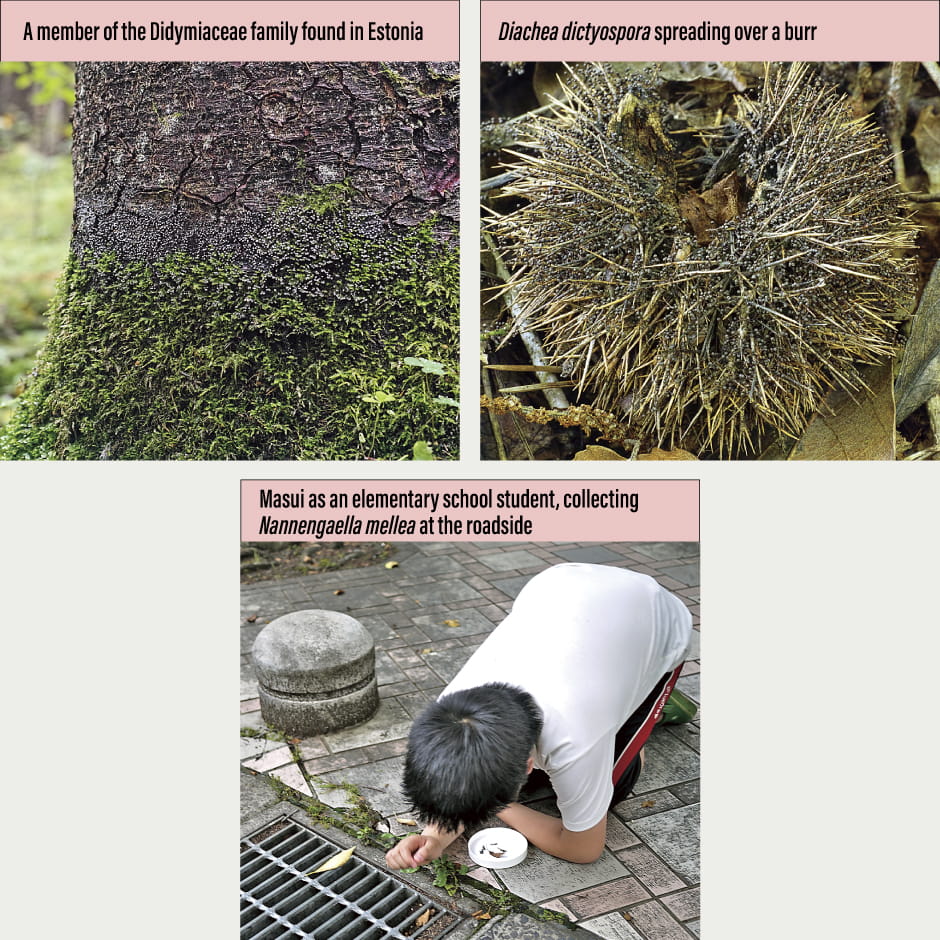
Figure 1. Myxomycetes lurking in familiar placesMyxomycetes live not only in rich natural surroundings, but also in familiar places around us, such as parks and roadsides.
Growing enormous while remaining a single cell
Amoeboid myxomycetes can be found clinging to tree stumps and fallen leaves in the form of a plasmodium, which is the form they take when they are active and growing. They range in size from tiny forms to individuals tens of centimeters across, and some can even grow to several meters. While myxomycetes can change their shape with ease, they are actually unicellular organisms. Whereas the human body is composed of an accumulation of tens of trillions of small cells, a myxomycete plasmodium grows to an enormous size while remaining just a single cell. Like the cells of other organisms, it has a cell membrane contains nuclei and cytoplasm. A myxomycete plasmodium actually has a huge number of nuclei and can grow larger and larger while readily altering its shape. One could probably call it one of the world’s largest cells.
A plasmodium usually moves at a rate of as much as 1 cm an hour as it ingests nutrients while expanding its mesh-like body. Although plasmodia appear not to have anything like a mouth, they can use the whole surface of their body to eat bacteria and fungi. They can also spread over mushrooms and other food sources, secreting digestive enzymes that break them down before ingestion.
There is a lot going on inside a plasmodium. Nutrients and nuclei flow within the cell’s tubular body at a rate of as much as 1 mm per second. This continual protoplasmic streaming proceeds at one of the fastest rates found in living organisms, with myxomycetes using this force to move. One deeply interesting fact is that this action is based on the same principle as human muscles. Human muscles contract due to the functioning of two proteins, actin and myosin. The same proteins produce the wave-like protoplasmic streaming motion that allows myxomycetes to move. It is fascinating to realize that they move using the same mechanism as humans.
Once it has grown sufficiently by ingesting nutrients, the plasmodium transforms into a fruiting body in order to produce offspring. Most fruiting bodies take a form resembling tiny mushrooms, which store millions of spores measuring just 10 µm—about the same size as a human cell. These spores are then dispersed by the wind. In its plasmodial form, myxomycetes prefer to live in places that are not exposed to sunlight, but the fruiting bodies need to come to the surface in order to disperse their huge quantity of spores efficiently. This is why one often spots fruiting bodies in sunny locations.
Spores carried on the wind are thought to sometimes reach the stratosphere and even cross continents. Upon falling into a suitable environment, the spores germinate, producing a tiny amoeba called a myxamoeba. The myxamoeba proliferates while actively moving around as a single cell. At this stage, it has mating types, which function somewhat analogously to sexes. The number of mating types differs from one species to another; some species have only one mating type and reproduce almost clonally, whereas others have two mating types and fuse with another individual. One species has as many as 720 mating types.
Our understanding of their way of life continues to evolve
When two compatible amoebae mate, they become a genetically new entity and again form a plasmodium. In other words, around the time they mate, they become something biologically different. This new plasmodium amasses nutrients while growing to a size of 0.5–2 mm in a week or so. It then continues to grow before transforming once more to produce fruiting bodies. This repeated process is the life cycle of myxomycetes.
Despite all that I have described so far, there are still many things we do not really understand about myxomycetes. For example, scientists used to believe that the triggers for the plasmodium to change into fruiting bodies were starvation and light, but my recent research has revealed that this is not necessarily the case. Our understanding of myxomycetes’ basic way of life continues to evolve.
They never seem to take exactly the same shape or appearance twice, and sometimes undergo dramatic transformations. Many people, myself included, find myxomycetes’ movement, way of life, and limitless beauty of form appealing. Furthermore, it takes just eight hours for the amoeboid plasmodium to turn into dry, mature fruiting bodies via an immature stage in which it is gelatinous and granular. The way in which a single plasmodium can transform into a huge mass of fruiting bodies overnight is dramatic and startling.
Their individual features differ from one species to another, and I never tire of observing how they look. Having lived alongside plasmodia over the years, I feel it is almost as though they have their own individual expressions and behaviors. Some appear to face each other as if consulting, while others suddenly move away as if startled or take on a slack, relaxed form. Looking at them from this kind of viewpoint makes plasmodia appear rather lovable (Figure 2).
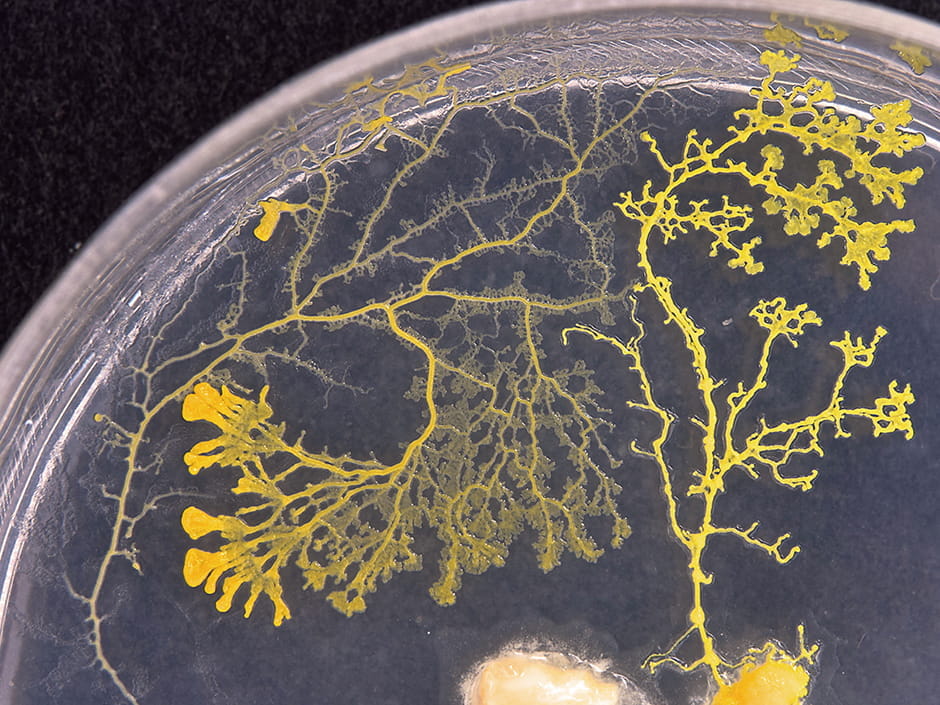
Figure 2. The varied “expressions” of Physarum rigidumWatching plasmodia display such varied movements can make one grow fond of them.
The appeal of myxomycetes does not lie solely in their plasmodia. Varying in shape and color, from one species to another, their fruiting bodies are also known as “jewels of the forest,” and are so beautiful that some people are avid collectors. The diverse forms of these species are stunning, including the champagne glass-like shape of Craterium minutum and the bright sky blue of Arcyria glauca (Figure 3).
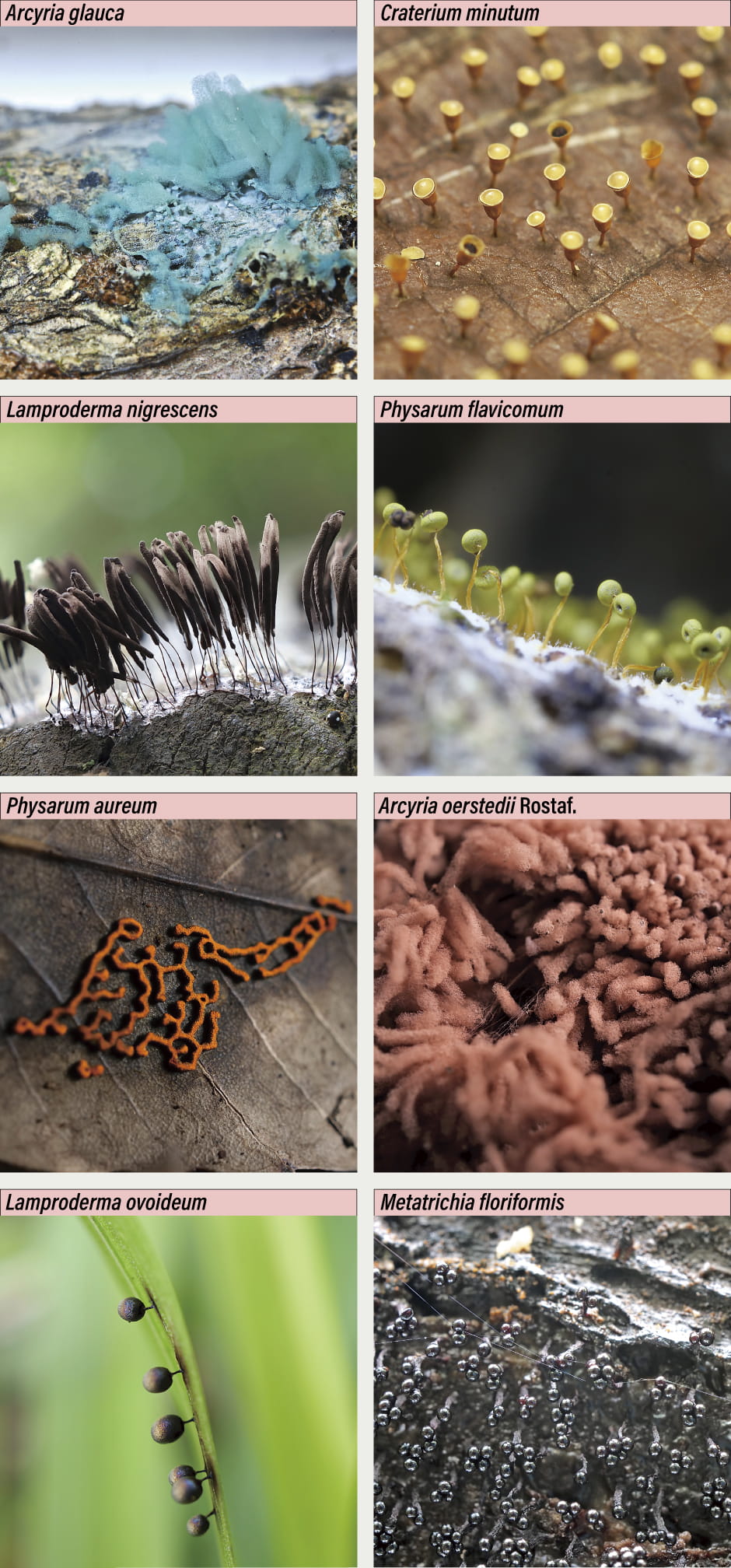
Figure 3. The appeal of myxomycetes’ diverse fruiting bodiesThe fruiting bodies of myxomycetes take very different forms, depending on their species, with their structures ranging from spherical and threadlike to coralloid. Spores form inside them and are dispersed by the wind once mature.
From the age of six, I cultivated myxomycete plasmodia in my own home, while observing them and repeatedly carrying out experiments. Initially, I observed how plasmodia of different species searched for food, but my interest eventually shifted to what happens when two plasmodia encounter one another. Then, on one occasion, I came across a situation in which the plasmodia stopped moving and appeared to be facing each other, as if having a conversation. That was the event that gave rise to my current research topic of allorecognition in myxomycetes.
The term allorecognition probably does not mean much to you, so allow me to explain. There are several species of organism, including planarians, that are capable of regenerating and proliferating after being cut in two. However, a myxomycete plasmodium can fuse with another plasmodium to form a single self. When it does so, the question is whether it remains the same self after fusing with another individual or becomes a new self. More fundamentally, why can it incorporate another individual into itself? These questions that arose from my observations form the basis of my research.
I continued the research I began as a third-grader at elementary school, and discovered from my experiments that myxomycetes can accurately tell individuals with which they can fuse from those with which they cannot. In other words, myxomycetes are capable of allorecognition. The objective of my research is to understand the mechanisms and significance of this ability.
Three types of encounters can be considered in myxomycete allorecognition: (1) fragments of the same plasmodium (self); (2) conspecific plasmodia from different isolates or localities (conspecific non-self); and (3) heterospecific plasmodia.
In the case of (1), the plasmodium fuses with it as soon as it encounters it. At the point of contact, a thick tube forms and the two plasmodial fragments fuse into one continuous cell, almost as if joining hands. This is hardly surprising, as they have completely identical genetic information.
The second case is particularly interesting. Can conspecific individuals fuse with each other? When I paired Physarum rigidum plasmodia collected from different localities, they sometimes remained still for an extended period after encountering one another, as if assessing each other. In some cases, they remained in place for about three hours; if fusion did not occur, they eventually moved away from one another. When I collected myxomycetes of the same species from five different locations in Japan and paired them off in a kind of round-robin to examine their behavior, only one of the 10 pairs was able to fuse, with the other nine pairs unable to do so. These observations show that even conspecific plasmodia can distinguish among individuals and fuse only with certain partners.
Naturally, in the case of (3), they do not fuse with other species. More surprisingly, they often showed no obvious response to the presence of a heterospecific plasmodium. When I carried out experiments using Physarum polycephalum and Physarum roseum, I found that, upon encountering each other, they would ignore each other and continue moving, so that they became intertwined, or one would climb over the other. They just ignored each other and passed by, without fusing with, avoiding, or ingesting each other. Although plasmodia can distinguish among conspecific individuals, they behave as though they do not recognize that a heterospecific plasmodium is present. As my research progresses, I find the allorecognition behavior of myxomycetes increasingly mystifying.
Recognizing other individuals without direct contact
Plasmodia have no eye-like sensory organ, so how do they detect and distinguish among the plasmodia they encounter? In many cases, the plasmodia stop about 1 mm apart and remain still for a time, as if assessing one another.
Accordingly, I focused on the secretions of myxomycetes. In a plasmodium, the cell is not exposed, but rather is wrapped in a secreted layer of mucus called a slime sheath. It occurred to me that this might contain substances that allow plasmodia to distinguish among individuals.
When I tested plasmodia using isolated slime sheaths, they moved into the slime sheaths left by compatible individuals and behaved as though attempting to fuse. In contrast, they completely avoided the slime sheaths of conspecific individuals with which they could not fuse. In other words, the slime sheath would appear to contain some kind of signal substance that transmits information about the individual. These results show that plasmodia can distinguish among individuals via a signal substance in the slime sheath without direct contact, and suggest that this non-contact recognition may allow them to assess compatibility more rapidly.
Viewed this way, myxomycete allorecognition can be understood as a system for distinguishing compatible from incompatible conspecifics. For an organism, incorporating foreign cells or tissues can carry substantial risks, and immune and other recognition systems generally act to exclude or eliminate non-self material. Myxomycetes, by contrast, may have evolved a recognition system that selectively permits fusion with certain conspecific individuals. Moreover, plasmodia may take several hours before avoiding an incompatible individual, whereas fusion with a compatible individual can begin within minutes to tens of minutes. From a conventional biological perspective, one might expect more time to be spent determining whether another individual is safe to fuse with.
However, myxomycetes are particularly intriguing in that they instead demonstrate great care in determining whether the other individual really is one with which they cannot fuse. There is still much about myxomycetes that has yet to be explained, including why they acquired this mechanism even though fusion is not essential for proliferation and reproduction. I am continuing my research to answer these questions.
The organisms on Earth evolved from unicellular organisms such as bacteria to multicellular organisms such as animals and plants. Myxomycetes, which belong to the Amoebozoa, occupy a position along this evolutionary path. Studying the biology of these unusual organisms may provide insights into fundamental questions in biology, including the evolution of multicellularity and what constitutes “self” in living organisms.
The world perceived by one type of organism differs from that perceived by another, and that is precisely why they have evolved adaptations to their environments that take a diverse range of forms. One form of adaptation is not inherently superior or inferior to another. Myxomycetes are organisms found all around us, in familiar settings, but they live in a completely different world from humans. I believe they are very important organisms, in terms of both biological evolution and their significance in providing inspiration for biology.